Nine of Swords
The Nine of Swords rarely carries a literal threat, but the psychological state it describes is so heavy and unpleasant that it is not for nothing considered one of the most unfavorable cards that can appear in a spread. This is an uncontrollable wave of anxiety, melancholy, fear, guilt, horror before life, rising in the unconscious. A kind of internal torture chamber (not accidentally defined by Banzhaf and Akron as "the spirit of the Inquisition"). This Arcana, appearing in a spread, testifies that the querent is suffering in one way or another (a clue can be given by surrounding cards) and some misfortune is oppressing them.
The Nine of Swords rarely carries a literal threat, but the psychological state it describes is so heavy and unpleasant that it is not for nothing considered one of the most unfavorable cards that can appear in a spread. This is an uncontrollable wave of anxiety, melancholy, fear, guilt, horror before life, rising in the unconscious. A kind of internal torture chamber (not accidentally defined by Banzhaf and Akron as "the spirit of the Inquisition"). This Arcana, appearing in a spread, testifies that the querent is suffering in one way or another (a clue can be given by surrounding cards) and some misfortune is oppressing them.
Old interpreters contain information that the card indicates the presence of irreconcilable enemies for the querent. But it happens that a person is so much their own enemy with their habit of burying their head in the sand from problems that frighten them that external enemies are not required by fate.
This card says that something strongly troubles the querent, possibly depriving them of peace and sleep. At worst, at present they are undergoing a real trial by losses, and it seems to them that the whole world is against them, and fate has set a goal to destroy them. This image of sleepless nights corresponds to a state of deep concern and depression. Here there may be an unclean conscience that prevents sleep, or a feeling of some danger to life, e.g., illness or heavy loss.
The card depicts night fears when we lie awake, tormented by our thoughts, and wait for dawn. At the same time, it does not tell us what exactly oppresses us so: a feeling of personal guilt or shame that drives sleep away, a feeling of uncertainty in one's strength before a difficult trial, a powerless experience of failure, or some real danger threatening our life. It shows only despair, melancholy, concern, sudden nightmare awakening, sleepless night, an atmosphere of gloom and suffering. In any case, the card says that the person has something to think about, and this "something" upsets and frightens them. Possibly, they know what should be done, but considers active actions too painful.
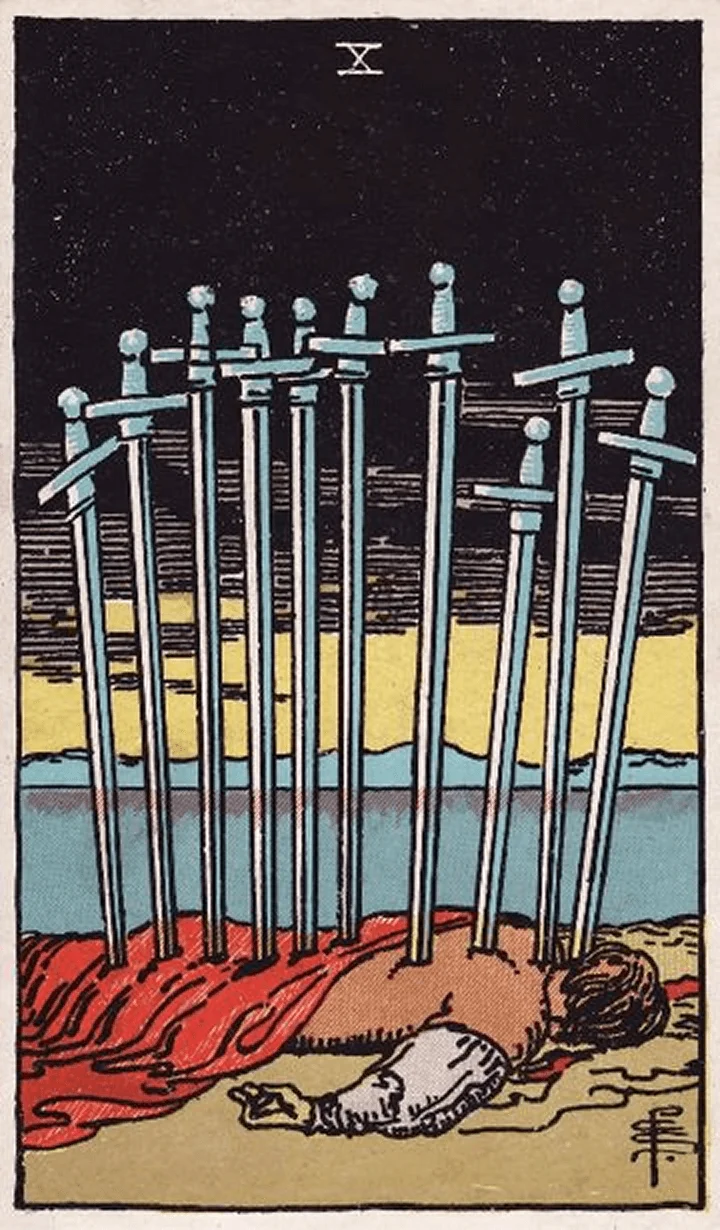
"The circle of torments" described by the Nine of Swords reflects pain, fatigue, and a matured desire to change everything for the better. Usually, a person cannot endure this torture for long and finds a way to end it (the next card – the Ten of Swords). This card is similar to the Ten of Swords in that it foretells a near end to the "dark period." However, it happens that the Nine of Swords points more to "residual phenomena" from already past or generally imaginary problems than to the problems themselves.
"Hostile whirlwinds howl over us, dark forces oppress us with malice." Strong anxiety (including at night), a depressed state, brooding over problems, painful reflections on work, fears about the future, doubts, uncertainty, pangs of conscience. Anxiety, helplessness, fear of failure, complete disorientation. Concentration of negative thoughts, akin to a nightmare.
This is the "sleep of reason" that breeds monsters, gnawing anxiety, primitive fantasies of crude violence or humiliating defeat. In general – an all-consuming, panic fear of something, an uncontrollable dread – of some ordeal, work, exams, sex... reality. A readiness to desperately shy away from all this, an ostrich position. Any call of reality forces one to plunge into an abyss of fear. The person torments themselves, imagining the worst possible things that could happen. Life has become a nightmare, this card says. The whole world is rolling into an abyss. Fears and worries are so great that it seems life is no longer worth living.
Extreme despair. Torment. Sometimes this card indicates the loss of loved ones, the realization of crushing grief and a lack of resources at the moment to cope with it.
In Tarot, there are perhaps no Arcana besides this one that would emphasize the state of shame and guilt, and this is worth noting. It is self-flagellation, various forms of self-punishment. Generally speaking, the person of the Nine of Swords likes to feel like a victim of circumstances and revels in self-pity without even noticing it. Fear of life's unfolding events is usually caused by a very strong concentration on oneself. Ultimately, with this card, we fear not just events, but what will happen to us. Sometimes the card describes an unmarried person, a circumstance that clearly does not beautify their life.
the card has a different meaning than on the mundane level, and this is well described in old guides.
Upright, it symbolizes a temple, monastery, sanctuary, cult and attitude towards it, as well as virginity, immaculateness, holiness, unearthly purity.
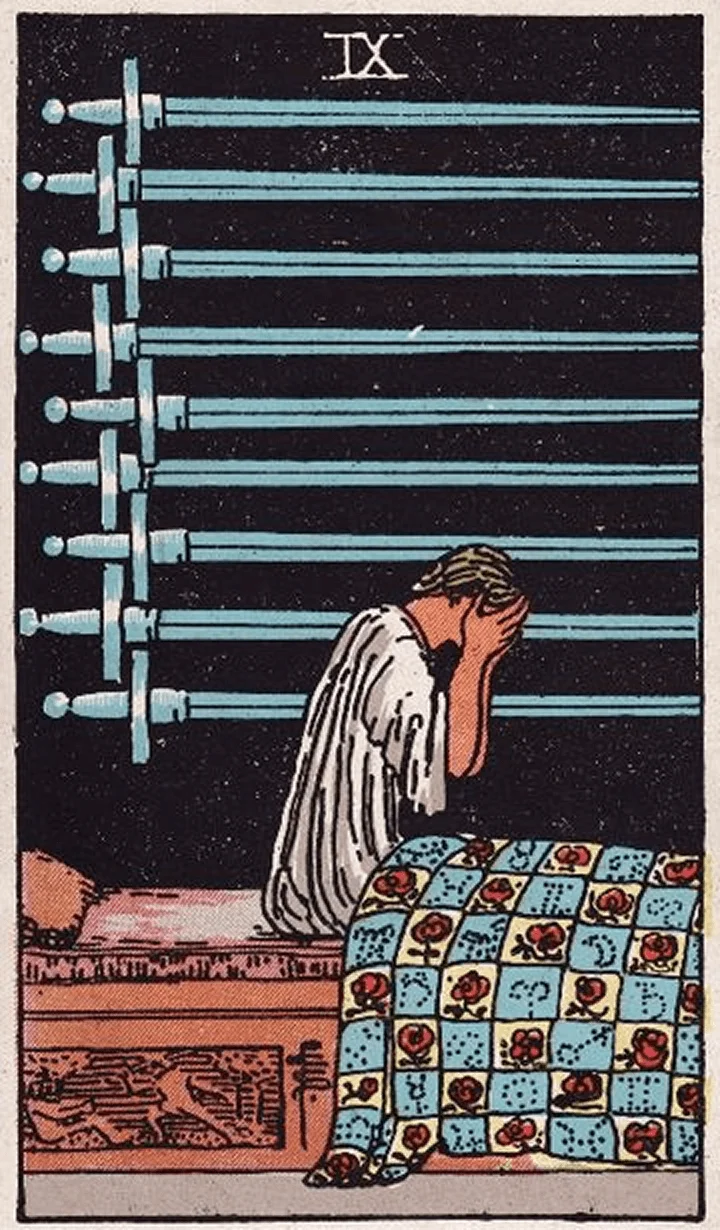
We found the following description of the Arcana's symbolism: "The card depicts a woman sitting on a bed covering her face with her hands: upon waking, she suddenly realized what is happening. Her insight is sorrowful. But the nine swords above her head point forward – into the future. Moreover, the nightmare is most likely imaginary: none of the swords touches the figure depicted on the card. On her coverlet are symbols of planets and zodiac signs governing the invisible life processes of the world organism. To the mind, which has taken the world apart and comprehended the fate of the past and the present, is given to comprehend the predestination of the future."
Starting to read this description, one wants to repeat the words from "The Da Vinci Code" – So dark is con of man! – only regarding the opposite visual deception than discussed in that film. "Well, where do you see a woman here? What tells you that this is a woman?" In fact, the character depicted by Waite is genderless. They wear a long shirt that obscures body forms, and we see no secondary sexual characteristics here. The concentration of negative thoughts and the immersion of consciousness into a gloomy primitive state – that is what is most essential. Crowley writes: "This is the world of unconscious primitive instincts, psychopathy, and fanaticism."
The Nine of Swords resonates with the sign of Sagittarius and its rulers, Jupiter and Neptune. Moreover, Jupiter gives this card religiosity, while Neptune can give this religiosity the most frenzied forms and brings fear, uncertainty, apprehensions, a desire to withdraw from reality, inability to survive contact with reality, misunderstanding, hopelessness, suffering. Frenzied "Victory or Death!", no compromises. A monk living in anticipation of a miracle, a sign appearing to him – that is another example of a subject of the Nine of Swords. It can also contribute to a radical change in worldview.
Sharp and sudden social ups and downs (a fleeting idol), changes in social status – also a typical situation of the Nine of Swords. This card also means a change in daily surroundings, relocation, and separation in a broad sense (not only from people and things but also from ideas). A monk, taking monastic vows, dies to the world. The Nine of Swords can also be known as the highest power of liberation. To wake up suddenly and suddenly be horrified by a situation, realizing it fully ("look around and soberly shudder"). In such a moment, enormous force is released, impersonal and merciless. Depression is an internal reckoning. This card corresponds to a serious spiritual crisis and trial. In a biblical sense, it is the experience of God-forsakenness.
The second decan of Gemini, ruled by Mars, expresses the idea of active inclusion of one's own will into the rational analysis of the world. The mind, confronting opposites, harshly dissects the unknown into parts to then recreate the world from the pieces, comparing them and establishing logical connections. This decan develops sharpness of mind and puts questions squarely. Mars suggests judging things from a personal position and speaking boldly about everything, but, on the other hand, mental dissection of the living organism of the world replaces the original wholeness (albeit with a perfect but dead scheme), therefore this decan has the name – "Cruelty."
This is the cruelty of cold reason towards the feeling body. In the end, feeling turns out to be right, and reason wrong because an attentive soul will always be able to quietly and imperceptibly destroy those barriers with which furious reason wages a protracted and bloody war. And yet, representatives of this decan tend to emphasize the omnipotence of reason. Dealing with the shortcomings of the present, reason realizes the connection between past and future.
Light and shadow (advice and warning)
Advice: the main remedy is contact with reality, steps to correct it, gradually bringing clarity into it. "The sleep of reason produces monsters." Refuse ostrich policy, do not torment oneself with inaction. Do what must be done and come what may. However, worthy positive behavior, sound responsible actions, taken decisively and firmly – that is the key to liberation. One must simply try to withstand this storm. The Nine of Swords, falling to a person in a relatively serene state, without obvious clouds on the horizon, may hint that somewhere and in something they should still worry in advance, give it thought, whether a radical correction of the situation is required, even for preventive purposes.
Warning: refrain from dubious affairs, do not rush to make decisions – matters will have negative development and one will long regret what was done. The trap of the card: thinking too much about problems that have no direct relation to us. Meanwhile, there are pressing matters requiring attention; one should attend to them, then the condition will stabilize.
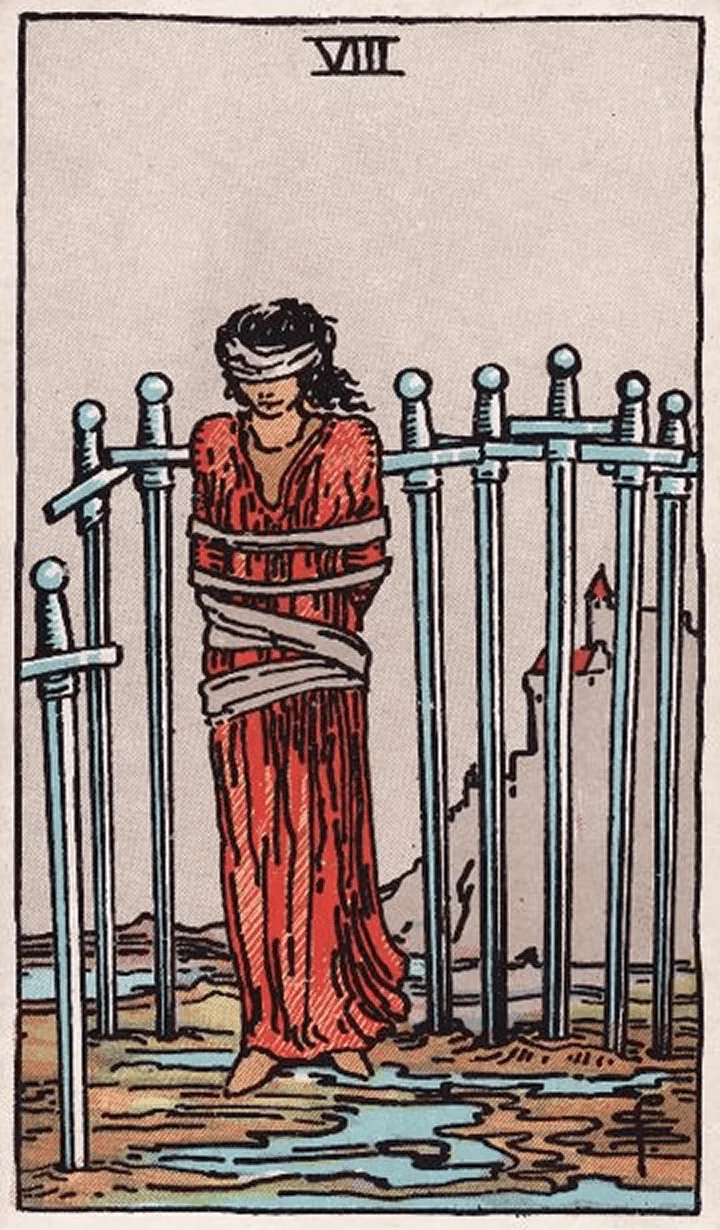
The Nine of Swords is a sign that the querent failed to cope with doubts and negative emotions (reflected by the Eight of Swords) and is now reaping the fruits of their own indecision. Sometimes work has turned into torture and the person hates it with all their soul, and the thought of the next working day deprives them of sleep.
Professional failures. Reprimands. In business, this card foretells failure and defeat. Combined with positive cards – at least severe stress on the path to success or (rarely) "achievement depression." This card responds to a state of panic and time pressure when a person cannot manage to do everything by the deadline. It is fear of control, inspections, audits, certifications, and public speaking. Often it is a card of extreme mobilization to overcome work problems, requiring strict rationality, a suicidal attitude towards one's "own song," sleepless nights, "no sleep, no rest for the tormented soul."
This card indicates confrontation with envy, injustice, or mobbing, but also hysterics in the workplace, inappropriate behavior, generally an uncomfortable atmosphere.
Professionally, this card corresponds to specialists working with mental anguish – psychologists, priests.
A card of melancholy and anxieties related to money. Finances are singing romances, and some particularly heart-rending ones. Traditional meanings: loss of property, business failures, bankruptcy, debts, blackmail. Payment delays. Deception in money matters.
Unlike the Ten of Swords, the Nine in a reversed position does not acquire a positive meaning. The same fear of illness and violence. If the upright card indicates fear, the reversed card is considered an indicator of shame. But it can also be the fear of being disgraced. In any case, the card remains a carrier of aggressive and destructive energy.
An unreliable person influencing the situation. Doubts, distrust, apprehensions, suspicions tormenting the soul, pangs of conscience. The person is plagued by suspicions and doubts, jealousy. Gossip, slander. However, the reversed card, while not canceling the negative psychological state itself, may indicate that there is no substantial reason for it. Heavy thoughts and fears have no basis in reality; the person simply "works themselves up." Sometimes, conversely, this card indicates that fears and pain are denied and suppressed inward, manifesting outwardly as mysterious physical symptoms like unexplained headaches or "panic attacks."
Awareness of pain, acceptance of it, purification through suffering. Sometimes – emerging from depression, the end of a dark period. Acknowledgment and relief of guilt. Only in Guggenheim do we find a positive interpretation – new hopes, the need to strengthen faith, anticipation of changes for the better.
"The sleep of reason produces monsters"
"How terrifying it is to live"
The Erinyes and Furies, personifying the torments of an unclean conscience
Images of the Inquisition
The Garden of Gethsemane of the soul
Cards from the same group
Ace of Swords
Two of Swords
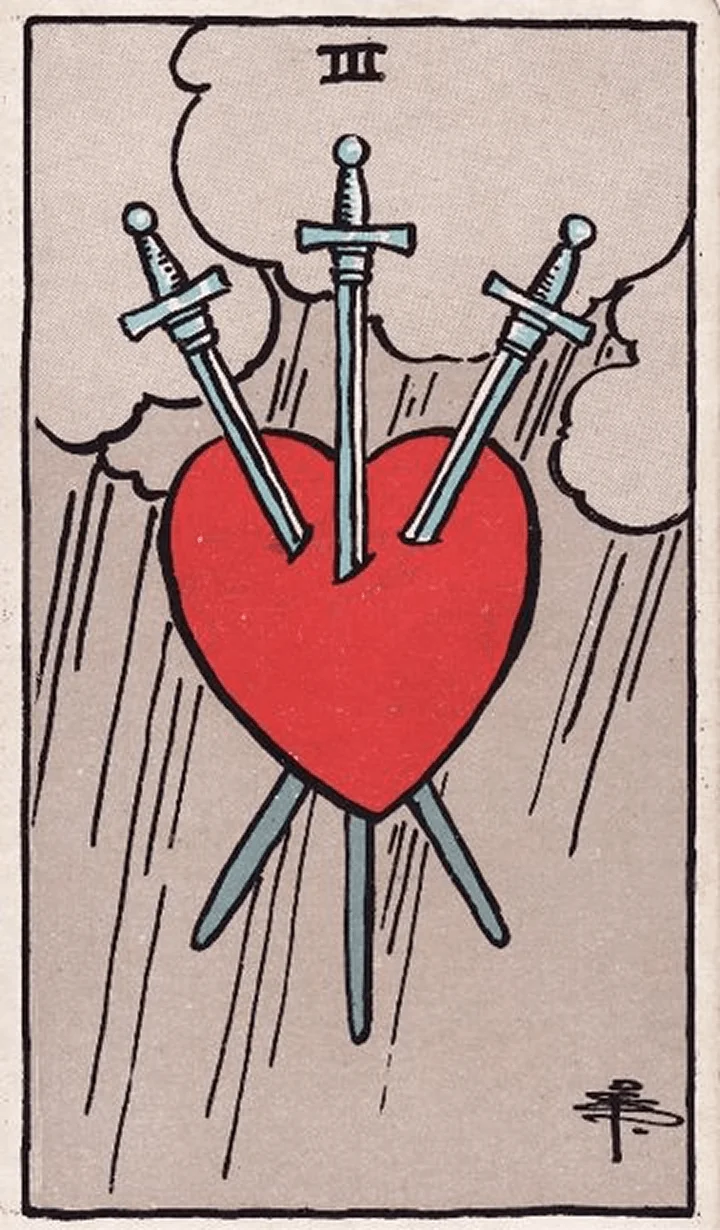
Three of Swords
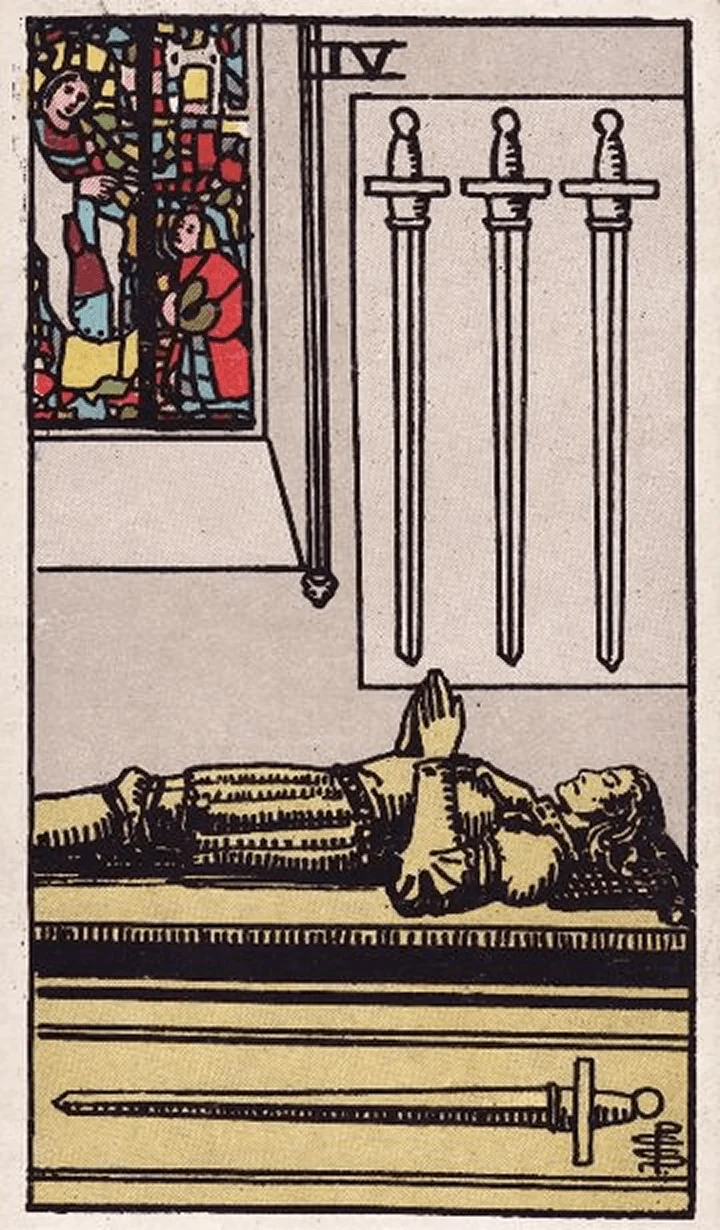
Four of Swords
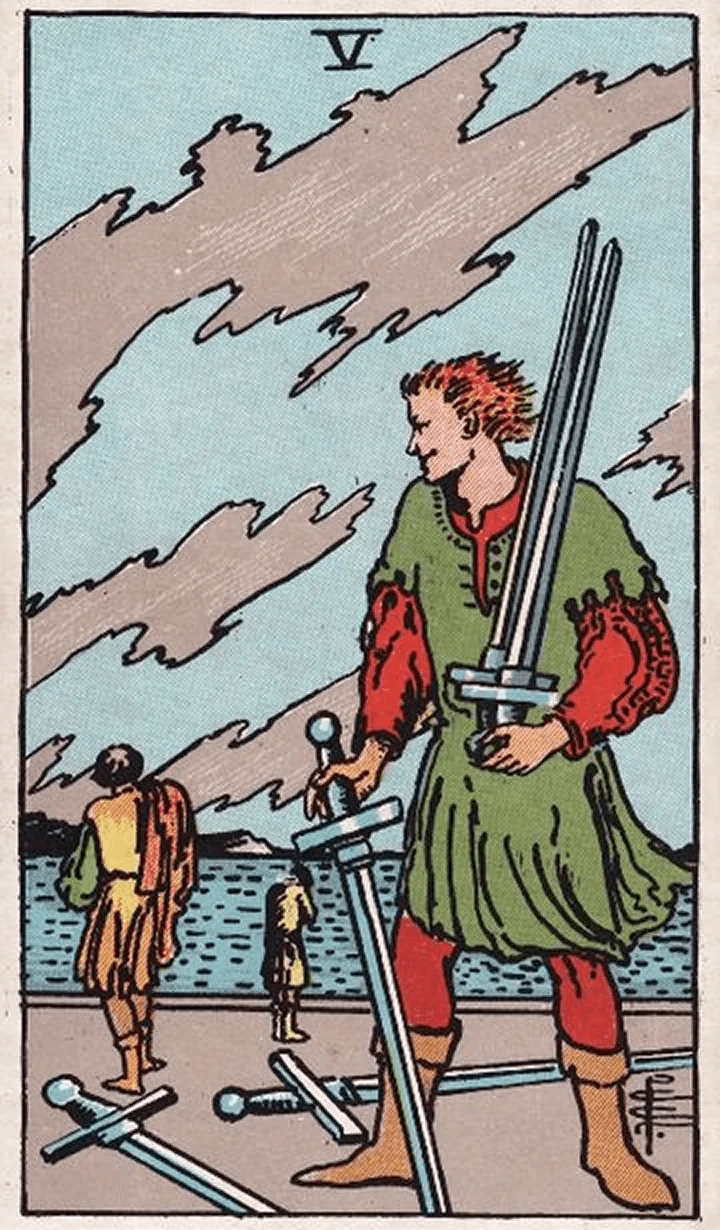
Five of Swords
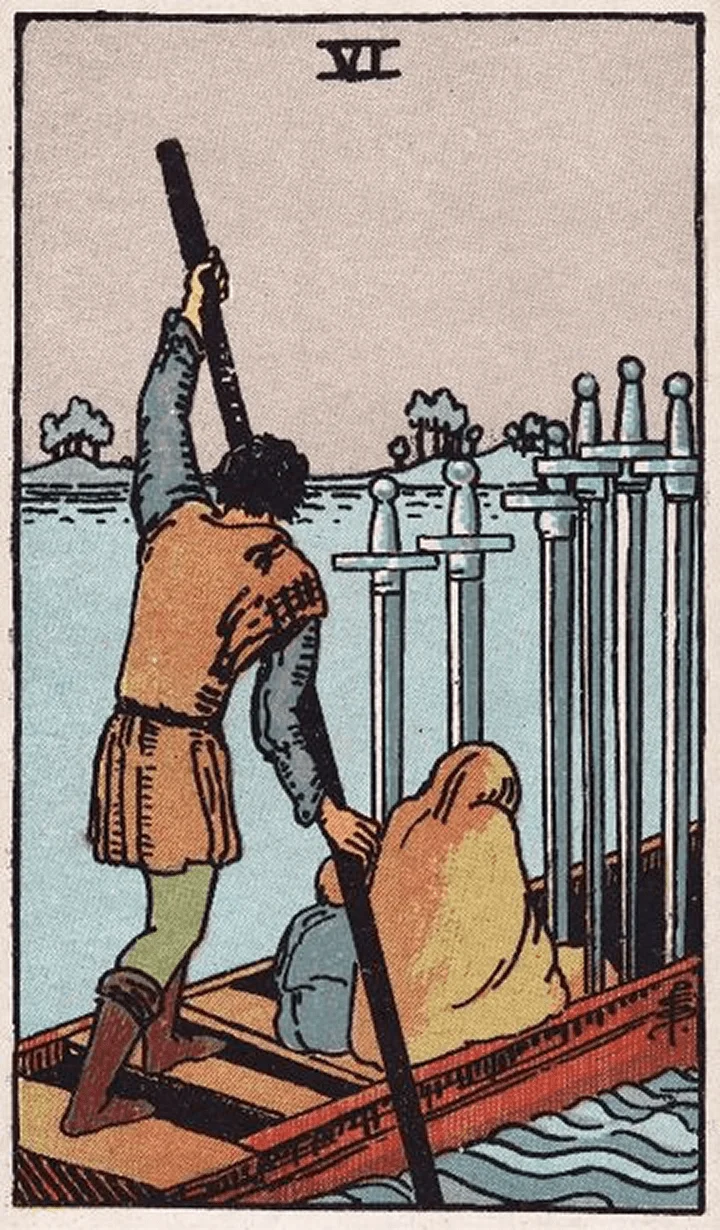
Six of Swords
Seven of Swords
Eight of Swords
Ten of Swords
Page of Swords
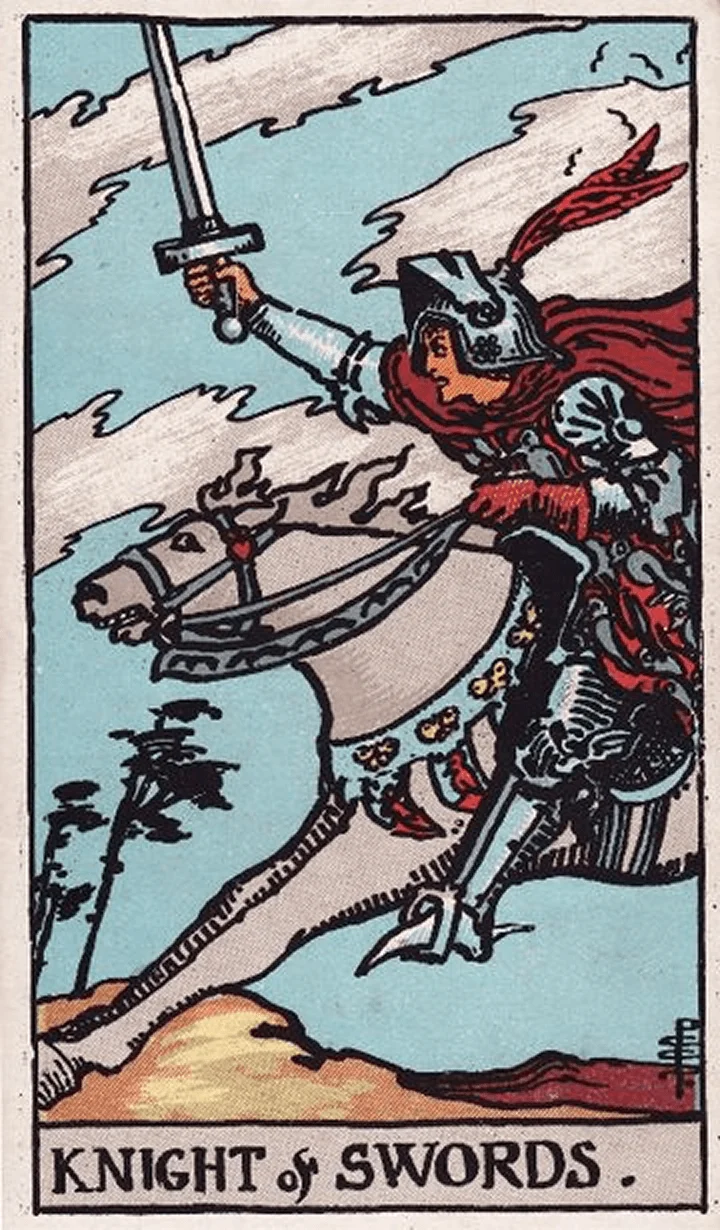
Knight of Swords
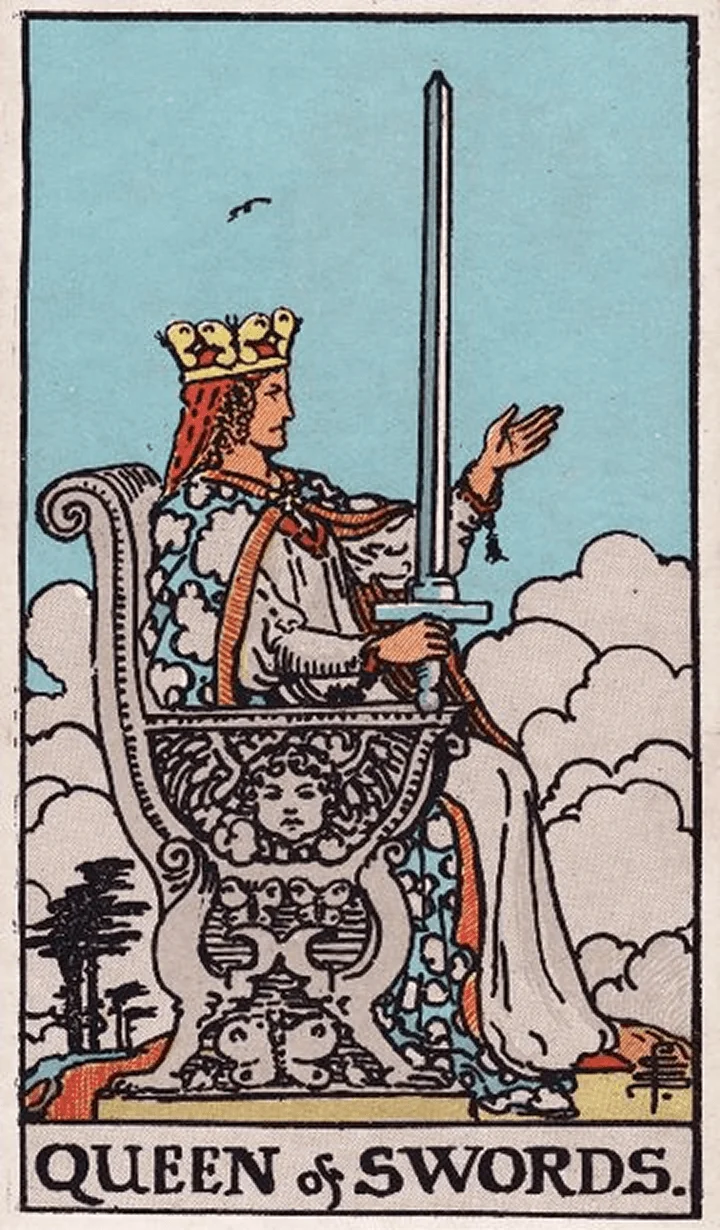
Queen of Swords