Nine of Wands
In a spread, this card speaks of a desire to defend oneself and the person's ability to cope with problems.
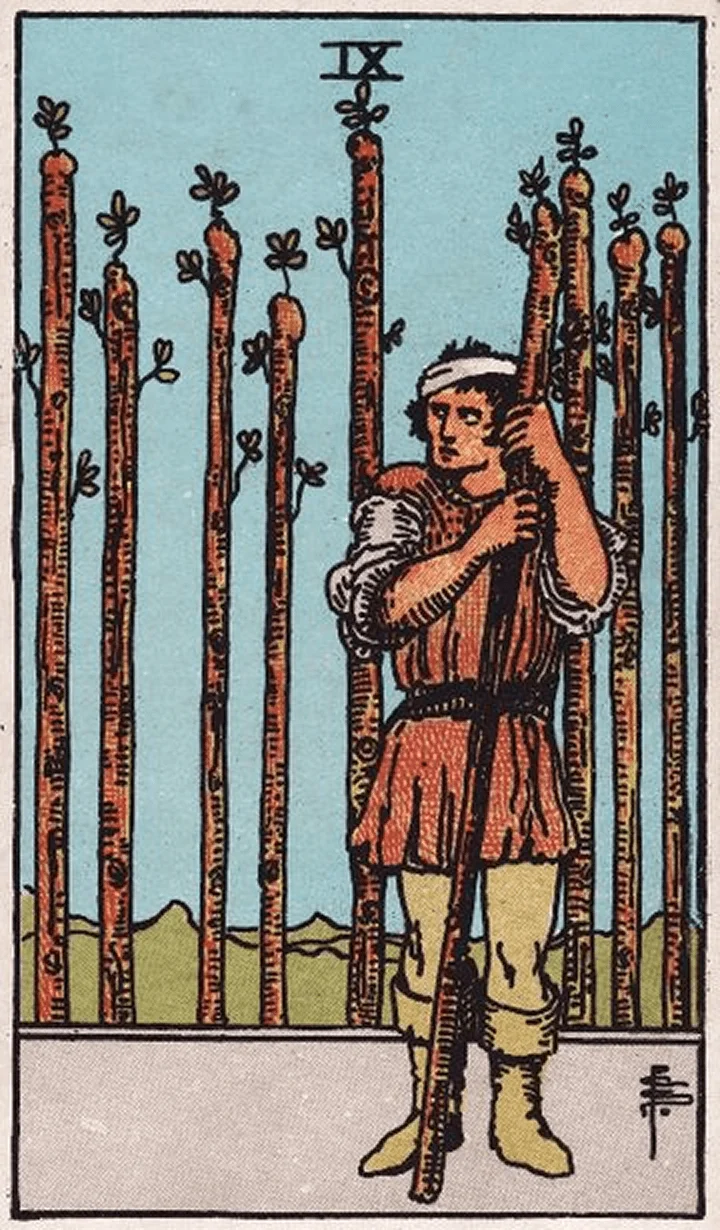
In a spread, this card speaks of a desire to defend oneself and the person's ability to cope with problems.
This self-defense can be interpreted both positively and negatively. It is about gaining "Great Strength," the ability to withstand any test of endurance, to worthily confront any difficulties and challenges of reality (and not to desperately shy away from them). The primary meaning of this card is "courage under fire."
Surrounded by negative cards, the old interpretation sounds like "impending disaster."
However, since ancient times, the Nine of Wands has been considered a card of victory, almost to the same extent as the Six of Wands. Compared to the latter, it has less "pomp and parade"; it is a card of will and the querent's personal inner strength. Therefore, this card can be considered a good sign if it falls to a person facing serious problems or dangers.
This is a card of mastery, strength, and courage; its energy speaks of the ability to endure the most difficult situations. If we assume that "good" interpretations do not imply tension, then the Nine of Wands is a difficult card, as it describes a confrontation of some forces (in the presence of Major Arcana – quite significant ones).
Most often, it indicates the incompleteness of a situation, be it an "unfinished gestalt" of the past, a not fully defined state of affairs in the present, or the absence of a final outcome in the future (this is generally characteristic of any Nines). Sometimes this card indicates delays, and we are forced to wait tensely for something. The Nine of Wands means stubbornness, resistance to some situation or event from which we expect only trouble. At the same time, it says that there is most likely no threat, only our memories of past troubles, hence our current "defensive" state.
The Steadfast Tin Soldier on duty. The person of the Nine of Wands is ready to meet any dangers head-on to protect previously conquered positions. This card is considered a kind of Strength of the Minor Arcana. It truly exhibits determination, strength, courage, perseverance. The person, even having gone beyond their strength (and comfort zone – for sure!), tired, "wounded," does not give up, does not allow themselves to leave their post, does not stop demanding high standards of themselves, subjects themselves to new trials, and performs new feats.
This card indicates both wary anticipation of difficulties and the ability to wisely plan one's activities and readiness to take any necessary action at any moment. This is a person who follows their own course and knows their battles are not in vain. They are characterized not only by a desire to defend themselves but also self-respect and dignity. They are a great specialist in defending their own interests (sometimes someone else's).
The person of the Nine of Wands is also a master at running away from the past and slamming the door behind them. However, they are mainly engaged in guarding that door – lest it swing open again. They listen warily to every sound coming from behind it and, if necessary, are ready to be fully armed.
This means only one thing – they are not free from the past they broke with. It still holds them at its threshold, not allowing them to step into the future. To free themselves from it, to cease being its hostage, the Nine of Wands still must finally let it go, turning it into a foundation for further transformations in life.
Surrounded by negative cards, the Nine of Wands can indicate depression, anxiety, and fatigue from life (everything is done "as a last resort").
The Nine of Wands is the ever-watchful reason that ensures the will does not weaken. In the famous prayer asking God for serenity to accept what cannot be changed, courage to change what can, and wisdom to know the difference, the Nine of Wands corresponds to the third part.
It is constant self-control; the person does not allow themselves to slacken. The pathos of this card is vigilance, being battle-tested, awareness of one's actions. Crowley and Ziegler emphasize the unity of conscious and unconscious, from which wholeness and strength arise. The vast unused potential of the unconscious can now be directed towards a goal, giving a sense of great power, which the person may even fear themselves. This power can transform all aspects of their being.
Ziegler writes: "The budding of self-realization does not allow a return to the familiar situation of weakness and ignorance." This complex and somewhat pompous phrase, however, becomes entirely clear to anyone who has ever defended their very self because they "outgrew" a tormenting situation and ceased to be helpless before it.
The release of energy beyond what seemed unbreakable limits – this is the key experience, the beginning of a far-reaching unfolding of inner potential (the Tower, by the way, is a great helper here). The person realizes they are capable of more. Confidence and the desire to develop come not from the conscious mind (which can engage in self-deception on this account) but directly from the unconscious. It emits a powerful stream of energy, inspiring the person, helping them feel their resources and potential, confidence in their abilities.
The card says everything a thesis advisor might say to a graduate student – don't be intimidated by the committee's questions ("courage under fire"), believe in yourself, move forward hoping for victory, don't give in. Since no defense is given for free, the card speaks of tension, threat, the need to withstand pressure. It points to psychological anticipation of difficulties and changes, sometimes to hidden enemies.
This is also the card of defense and self-defense in the psychoanalytic sense (from changing ideas about oneself). It can be fear of one's own unconscious, fear of reopening old wounds. It also speaks of a person's ability to successfully fence themselves off from the past, break with it, abandon old habits, burn bridges. "The door to the past will slam shut so tightly that not a single sound will be heard from there." Achieving a new promising level (albeit at the cost of the typical winner's wear and tear).
The Nine of Wands signifies penetration to other levels of consciousness. This card symbolizes the beginning of seeing oneself in a different light. On a social level, this can be expressed in choosing a new system of values (or sometimes false authorities that, nevertheless, emotionally fuel the feeling of strength). Through the number nine, a strong influence of Neptune penetrates; the card is also very much connected with authorities, belonging to a particular cultural tradition, views, value system.
The appearance of the man on the card indicates that he has just had to endure a difficult battle, and he is still living it, still looking around for enemies. He does not know or does not want to seek ways of communication that would allow him to avoid further conflicts. And in vain: one need not brandish weapons, not expect an attack; most likely, there will be none. It's time to engage in peaceful affairs, perhaps finally work on oneself, dedicate strength and time to spiritual development, this card says. Reversed, it means one more blow may have to be parried, but it will be the last.
The second decan of Sagittarius symbolizes the expansion of consciousness, its dominance over the world, and expansion into all spheres of being. Its ruler is traditionally considered to be the Moon. Energy here transforms into high receptivity to ideas and feelings and an intuitive understanding of the holistic picture of the world, which contributes to building a solid worldview. Relying on past traditions serves as a source of spiritual wealth and practical knowledge of the present.
Sagittarius relies not on themselves but on what lies behind them: their worldview and the objective ideals of society. They tend to idealize past experience. This is the most romantic decan of the Zodiac, establishing a living connection with the past and drawing spirituality from the depths of centuries. It is driven by a striving for independence, love of travel and other cultures, and a tendency to take responsibility for what is happening, sometimes more than a person can bear.
Excessive expansion leads to a dissipation of personality (which can be indicated by Jupiter conjunct the Moon). And to avoid making empty promises and falsely raising hopes, it is important to control the completion of each stage of activity according to the principle: "Finished task, walk free!" The effectiveness of work strengthens confidence in one's ideas and gives impetus to new achievements.
And yet, unlike other Nines, the Nine of Wands reflects the character of Pisces rather than Sagittarius. Neptune's influence here is stronger, Jupiter's weaker. It symbolizes the anticipation of difficulties and changes, the expectation of turbulent periods in life and the foreboding of them, foreseeing enmity.
Light and Shadow (Advice and Warning)
Advice: Cast aside self-doubt and do what you lacked the courage for. The card says: persevere stubbornly in your activity and you will achieve your goal. A favorable outcome is already near. It is important not to succumb to illusions and not to give in. Bet on skill, experience, discipline, and stubbornly defend your interests.
Shadow: Illusion of one's own grandeur and an overly rigid approach to life's problems.
Intelligent planning of activities, high self-discipline, ability to cope with difficulties and problems, again – courage under fire. Well-done work, successfully completed tasks (We did it!). Fatigue coupled with a readiness to continue fighting and defending – the situation is almost complete but not quite, so the card can be defined as a test of endurance. It is known that the closer to the goal, the stronger the resistance, and darkness is thickest before dawn. An old interpretation – a short break in the ongoing struggle.
This card indicates a foreboding of someone's opposition, foreseeing the actions of competitors or ill-wishers. Traditionally, this card marks the winning side.
Here the symbolism speaks for itself. The main character of the Arcanum is a man about thirty, dressed in the clothes of a commoner and laborer. He is alone, but looks warily at someone who seems about to enter the space of the Arcanum, his whole appearance expressing calm readiness to defend himself (and thus similar to the Arcanum "Strength"). His head is bandaged as if wounded, but he doesn't look like he's suffering much. He is pale, with circles under his eyes, as after sleepless labor nights, and resembles a tired, battered thesis student, warily awaiting the committee and ready to defend, not intending to give up. In the course of this work, the person, though tired, has learned planning and discipline, acquired new mastery of a different level than before.
Now they are ready for confrontation, to show that very "courage under fire." The palisade behind them is the previously conquered positions, what they are defending. The card of an upperclassman at a serious educational institution – still modest but already wise with the colossal learning experience unknown to newcomers (from their point of view, he does the impossible). The hard part is in the learning, the easy part is in the battle. He is often sleep-deprived, pale, with circles under his eyes (and maybe bandages in various places), labor and fatigue are his norm, but he is not going to give up and has already acquired skill and learned discipline and courage. He is used to doing the impossible under the guidance of his supervisor, who won't let him give up. A test of endurance and readiness to cope with problems.
This card corresponds to police and investigators, firefighters, dispatchers, medical and emergency team workers. It is the professional card of security guards of all kinds, security service workers, and experienced defenders of someone's interests (e.g., lawyers).
Traditionally – a card of financial success, an indicator that things are going quite well in the material sphere of life (at least, ends meet). The person has achieved previously set goals and is now reaping the fruits of their own diligence and hard work.
In the practice of modern observations, it is more about protection from creditors, attempts to stay afloat, or prevent the squandering of existing resources. The card can also describe attempts to improve matters after some shocks, and confrontation with extortion; in any case, it's not the most cloudless situation.
The key ability of the Nine of Wands is the ability to offer strong resistance. And to whom – a rival or a potential partner – other cards will show. This card can indicate defending a relationship or freedom from it.
This is a card of steadfastness in solitude – the person actively defends themselves against encroachments. Perhaps this is due to some past trauma, painful experience (it's no coincidence the character on the card is bandaged and stands in a defensive posture, looking wary as if expecting enemies). The "military fortifications" of the Nine of Wands are erected by the ego, feeling the need to be alone and defend itself from threats. A partner described by the Nine of Wands is suspicious and cautious. They do not trust the querent and are ready for self-defense if needed. They have, as they say, a strong character. In relationships, the card can indicate alienation, distancing from each other, fatigue. Vivid emotions and mutual exchange are weakly associated with this card.
The Nine of Wands embodies a state of soul that in fairy tales is called a "cold heart." In everyday terms, it means we bristle with all our needles and resist any changes, although we suspect they could be very important for our further development. Although sometimes it can mean the exact opposite – if, for example, we have taken a decisive step and slammed all doors of retreat behind us.
As an indicator of illness, it can speak of head injuries, concussion, also chronic fatigue and dulled attention, energetic exhaustion.
One of the traditional interpretations states that the appearance of this card points to an ailment that must be seriously fought, health undermined by overexertion.
The reversed Nine of Wands is considered an indication of undermined, unreliable health and problems with the immune system (the body finds it difficult to "stand up for itself").
The reversed Nine of Wands has long been considered a bad omen. It is a card of at least obstacles and delays, problems and troubles; at worst – failure, loss, and disasters. What the person diligently defends with the upright card is taken right from under their nose with the reversed. Also, problems arising suddenly. It is also a card that says experience teaches nothing – the person steps on the same rake again and again, which have already hit them on the bandaged forehead once.
In a reversed position, the card indicates rigidity of thinking, narrow-mindedness, closed-mindedness, loss of connection with reality. Often it is pointed out that the person is fighting what is not of primary importance (treating symptoms, not the cause) or defending what is not worth it, and this situation only drains their energy. This card advises abandoning such behavior.
Dead periods in work, a point of regression, regression in development. Poor health – the person is still inclined to rely on themselves, but strength fails them.
With Strength – great resilience, determination, and bravery
With the Seven of Wands – defending one's opinion and one's rights
With the Two of Swords – exceptional isolation, rejection, rebuff
Three of Cups – reduces the isolation and distrust of the Nine of Wands
With the Eight of Cups – weariness, depletion of resources for struggle and confrontation
With the Eight of Pentacles – exceptional perseverance
The famous prayer: God, grant me the serenity to accept the things I cannot change, the courage to change the things I can, and the wisdom to know the difference.
"May the marks left by your battles be marks of honor and achievement."
Cards from the same group
Ace of Wands
Two of Wands
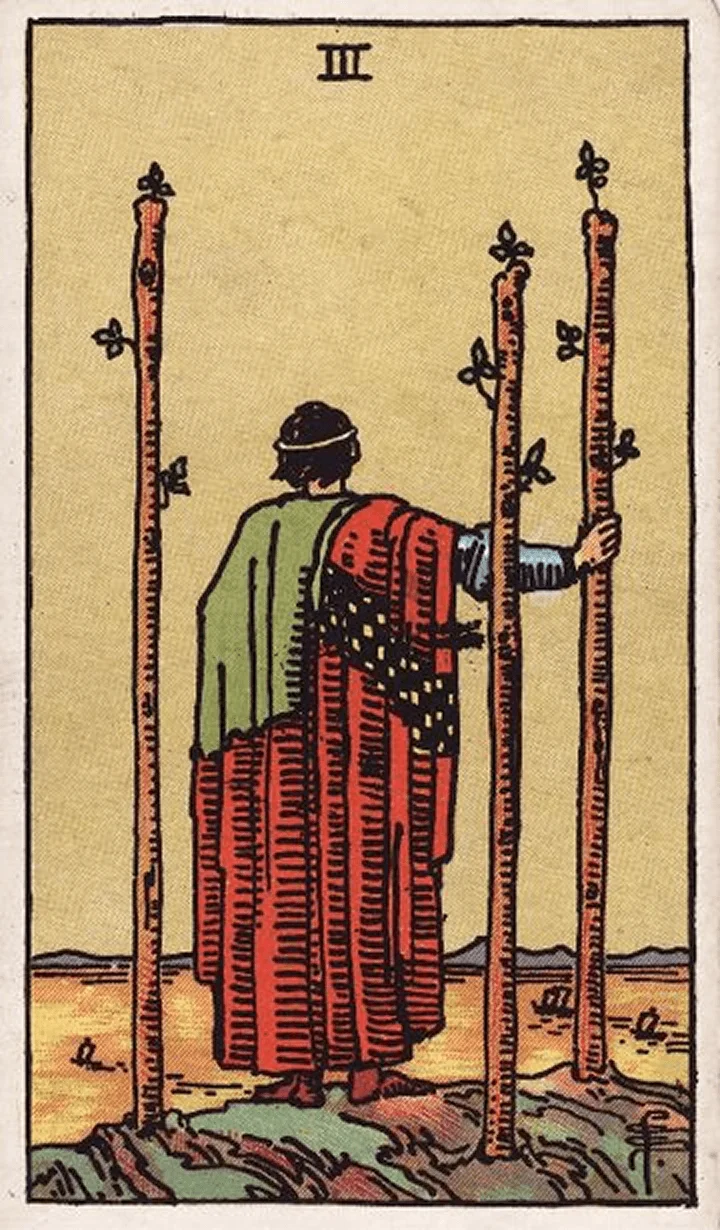
Three of Wands
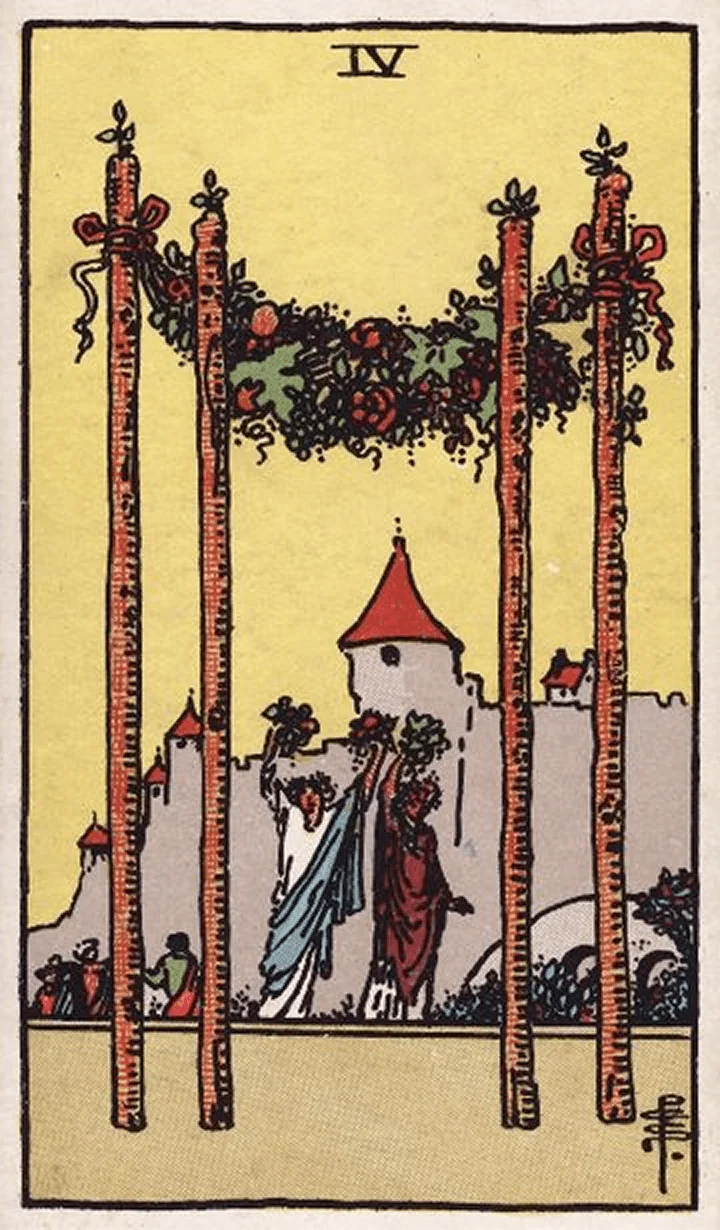
Four of Wands
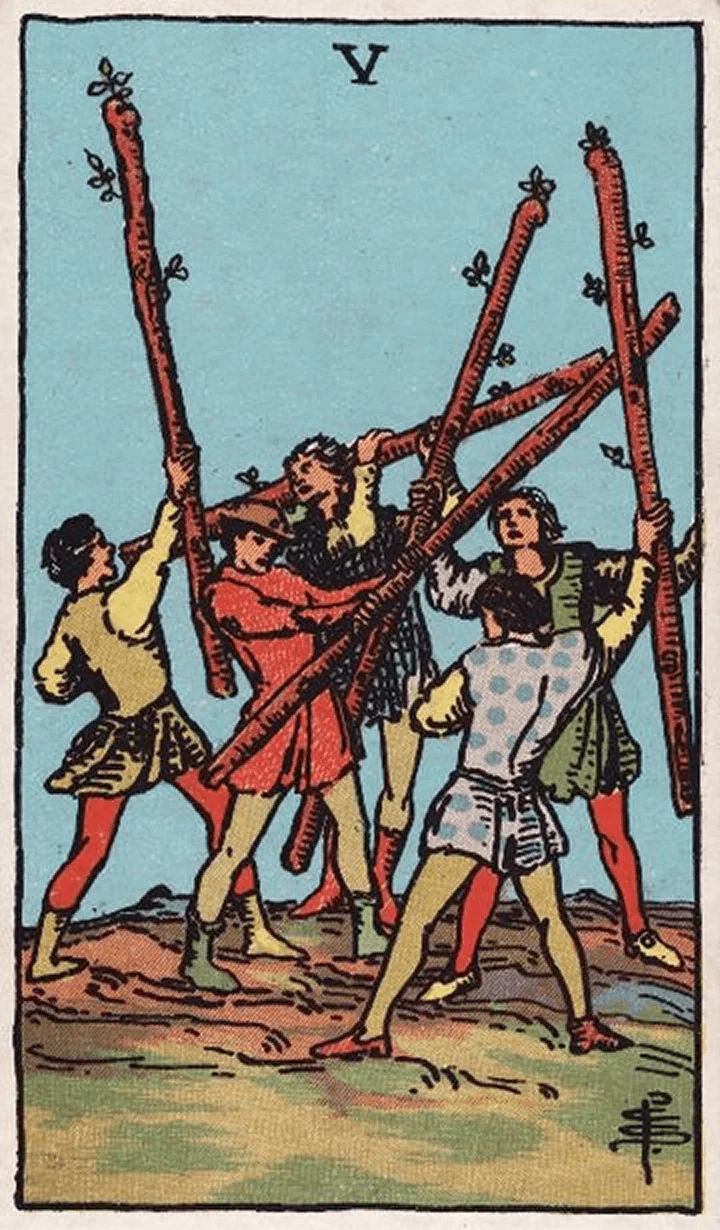
Five of Wands
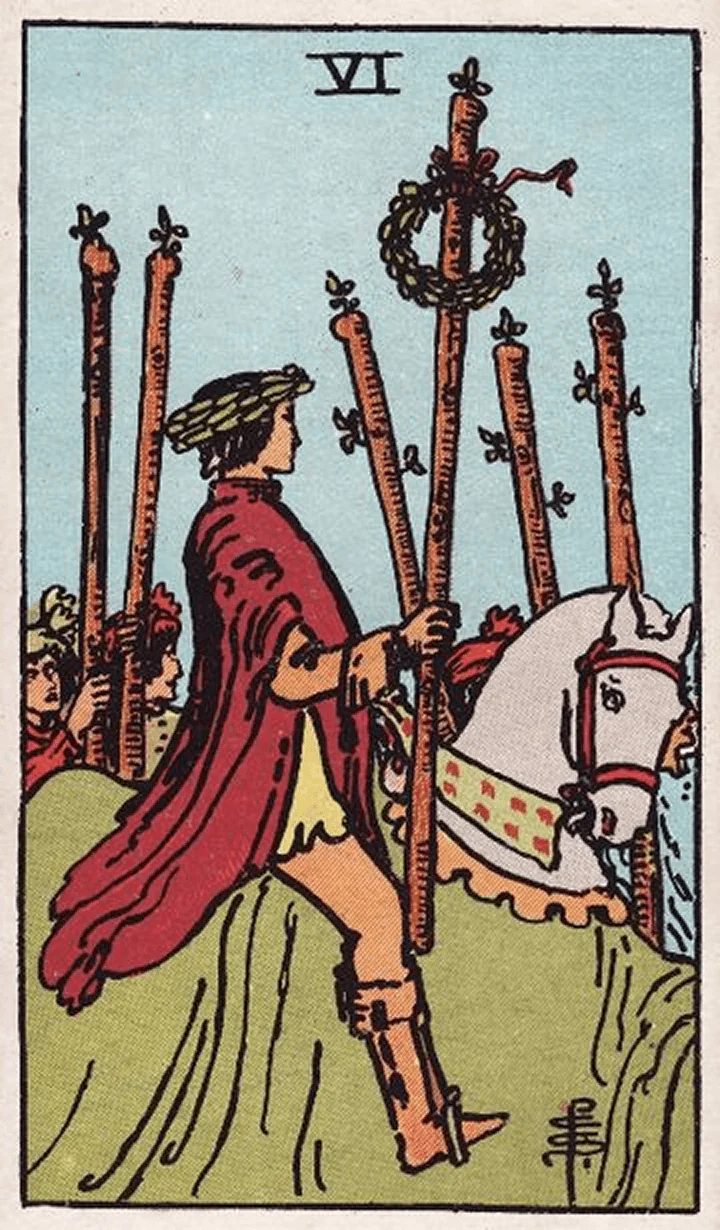
Six of Wands
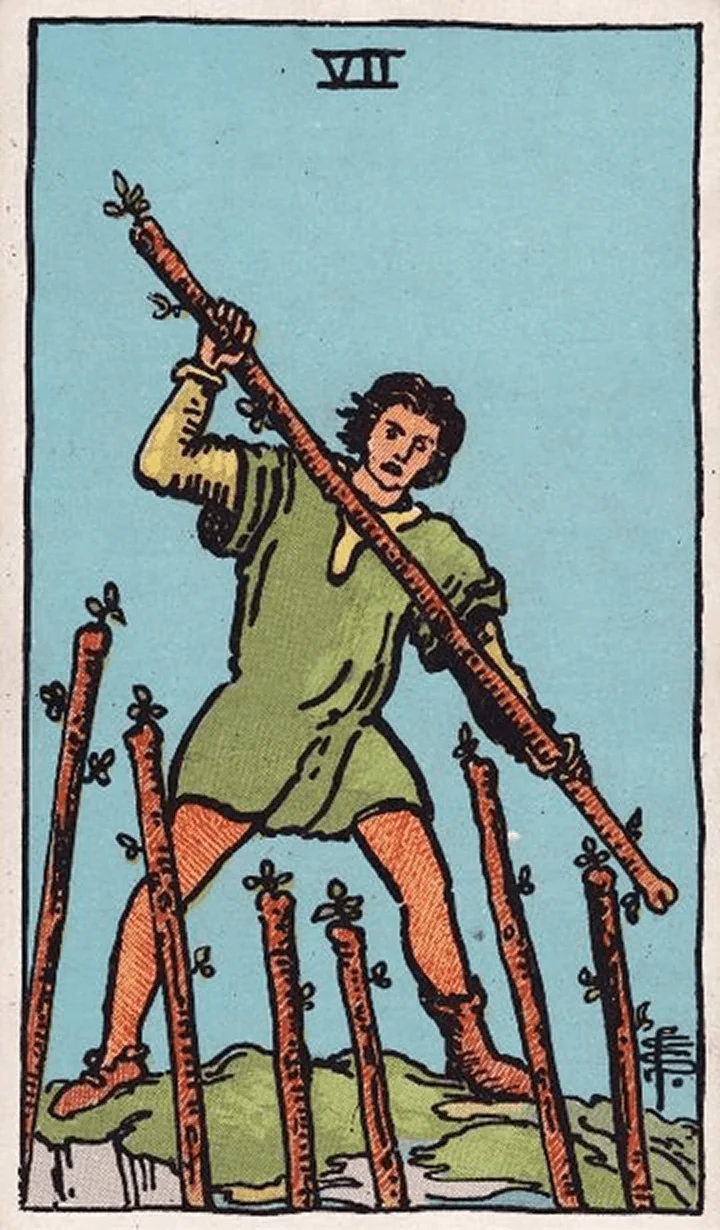
Seven of Wands
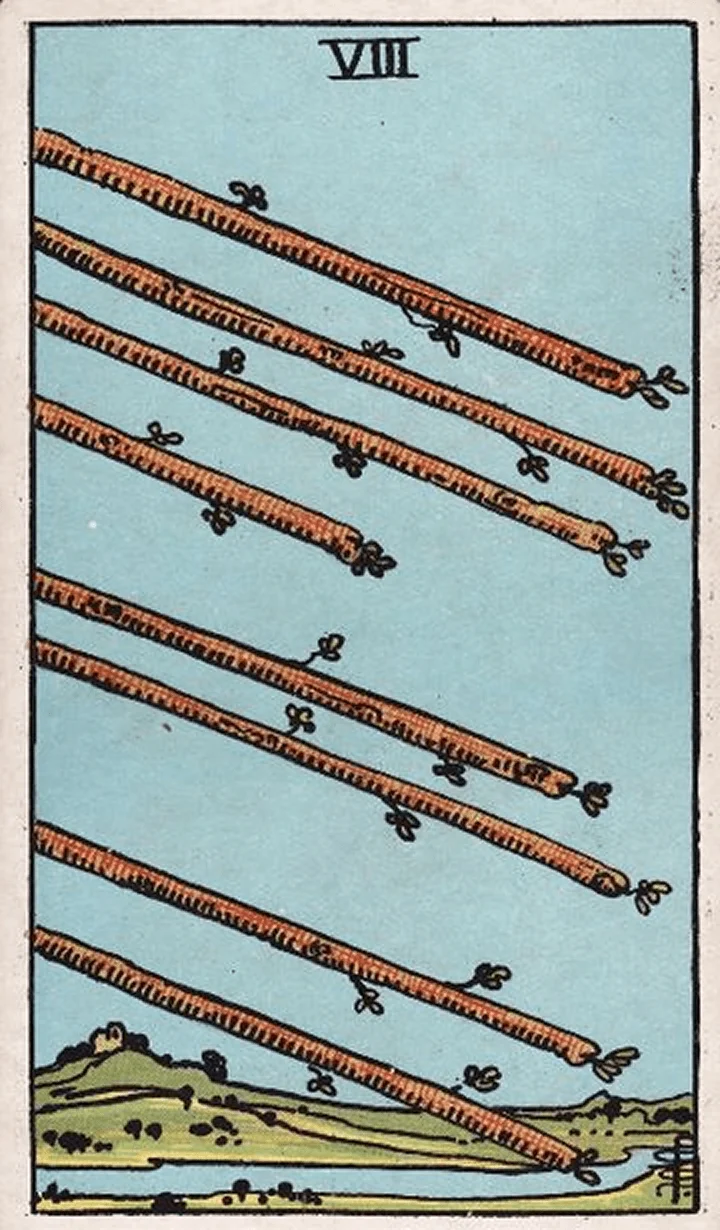
Eight of Wands
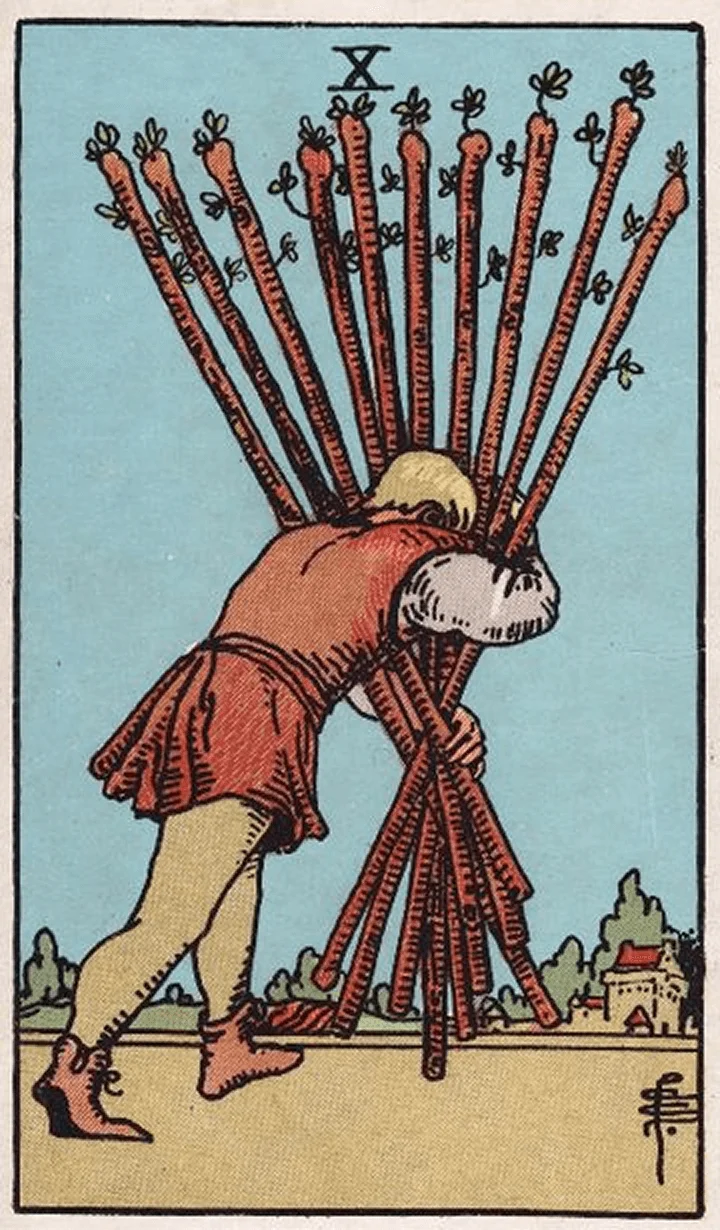
Ten of Wands
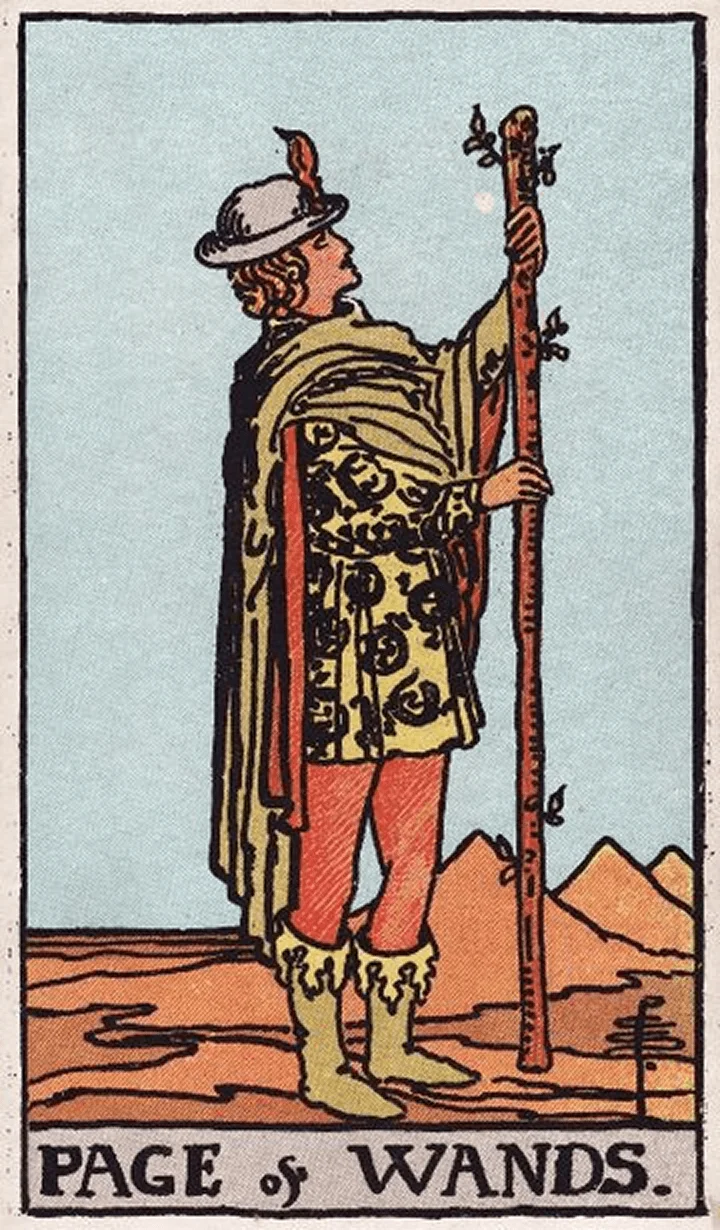
Page of Wands
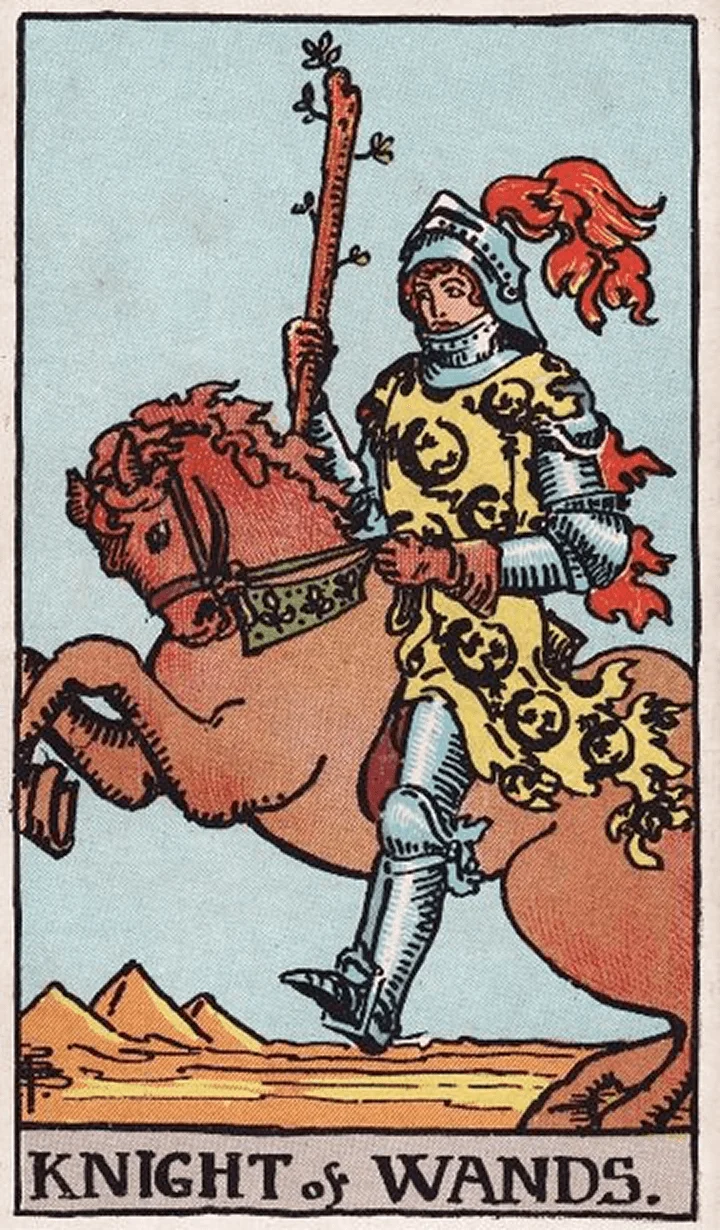
Knight of Wands
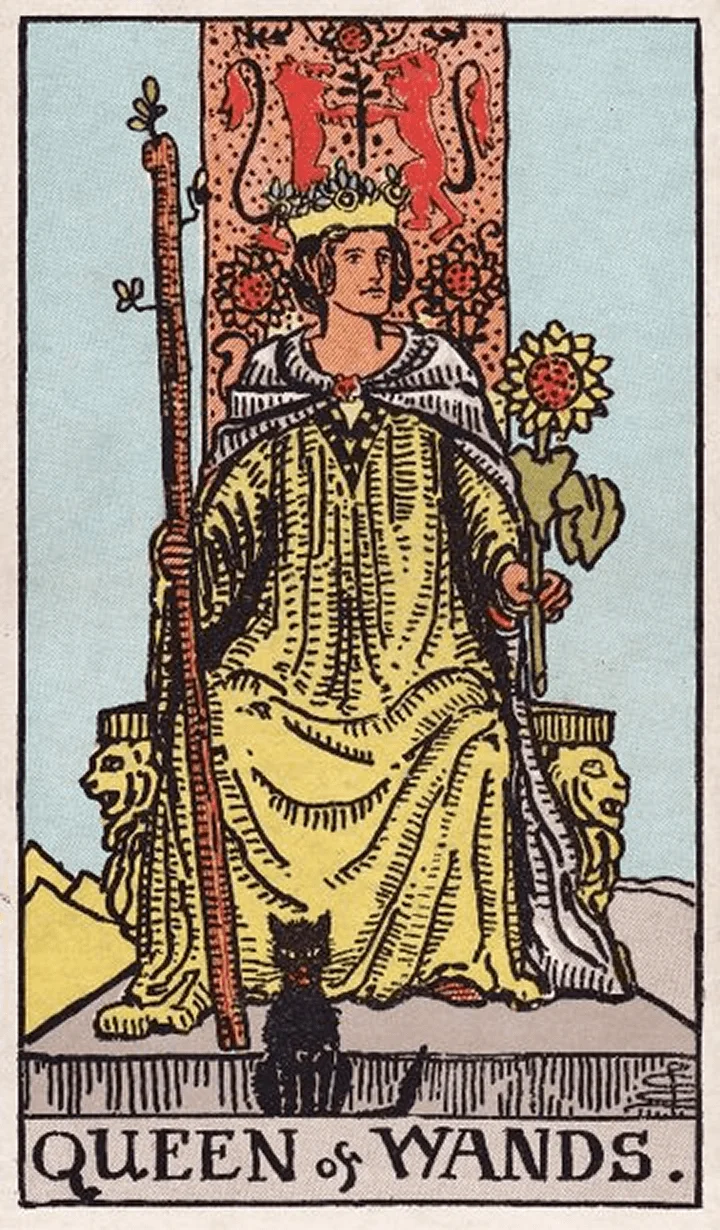
Queen of Wands