Two of Swords
Interestingly, just as in many books the Two of Wands is attributed the meaning of troubles, but practicing tarot readers consider it neutral, so in the case of the Two of Swords, books often assure that 'the card is generally favorable,' but practicing tarot readers consider it rather negative.
Interestingly, just as in many books the Two of Wands is attributed the meaning of troubles, but practicing tarot readers consider it neutral, so in the case of the Two of Swords, books often assure that 'the card is generally favorable,' but practicing tarot readers consider it rather negative.
In traditional interpretations, it is considered a rather favorable card, with such meanings as harmony, firmness, balanced strength, compensating factors, agreement, thoughtfulness of decisions, accuracy of judgment, realistic assessment of the situation. It is attributed 'peace of mind,' 'sense of justice,' 'balanced mind,' and 'well-thought-out plans.' In conflict, it indicates that the confrontation will not last long and will not be so strong as to really hinder. The choice will be based on careful weighing of all pros and cons.
But more often, the Two of Swords manifests its other meaning—waiting and steadfastness in a difficult position. There are some unresolved problems, and the tension with the current balance of forces cannot be reduced. This may be the calm before the storm of the Three of Swords. We are unable to understand how it would be better to act, what to choose. It is unknown how events will develop. The situation is ambivalent, uncertain. The Two of Swords speaks of a certain uncertainty of the person regarding what is happening, of suppression of emotions and search for a solution. The card falls when the querent is in a kind of spiritual paralysis, unable to make decisions and act with confidence.
The absence of a decision is related to the fact that there are two opposite points of view on the question, and the person is not ready to accept either. The two swords can symbolize two factors that have put the querent at an impasse. To clarify them, one can draw two more cards.
The best the Two of Swords can give is balanced and reasonable thinking in a hopeless situation, the development of some resultant, arriving at some constructed compromise. In a positive card environment, it promises careful analysis, step by step, precision of thinking, and the ability to formulate conclusions. The problematic nature of the Two of Swords is that the found equilibrium may turn out to be either a truly intelligent and delicate balance of forces in a difficult situation or a complete dead end, a stalemate.
Most often, this card says that a person is trying to cope with their feelings (especially fear), suppressing and hiding them, including from themselves, and trying to find inner balance, for the time being consciously ignoring what knocks them off track.
For the future, the card foretells participation in some negotiations, an attempt to soften, pacify one or another complex situation. In old interpretations, it is mentioned that this card can be interpreted as impressive protection for the querent if they are seeking help.
In a negative card environment, old interpretations foretold 'dangerous times requiring courage; a duel, but without a fatal outcome.' Nowadays, with an unfavorable layout, one can expect discord, dissolution of an alliance, a clash.
Refusal to see something, though it's not necessarily a real problem—rather, what the person perceives as a problem. A state where we can't see the forest for the trees or actively avoid solving certain issues. Sometimes a person truly practices an ostrich policy, hiding their head in the sand and not wanting to pay attention to what's happening around them so as not to be painfully hurt (the next card is the Three of Swords), but still, it's not all that simple here.
With this card, a person closes off from some excessive influence (another person or situation) to avoid being confused. The Two of Swords is often described as tension and sadness, and not that this is incorrect, but... it's very important to understand that these are not the emotions of Cups. We are dealing with Swords after all! And they describe a state in which, by and large, no one can help or hinder the person. They refuse help and ignore attempts to hinder.
This is how an actor might feel, tuning in behind their screen before a dramatic performance—right now they need neither colleagues, nor the audience, nor the director. This is one of the cards of self-defense; through it manifests a desire for peace and balance, to withdraw and concentrate, to put thoughts in order. With the Two of Swords, we are not so much looking for a way out of a difficult situation as we are engaged in restoring control over our inner world, aligning our assemblage point.
This is necessary to begin with, because as long as we are torn by doubts, contradictions, and frightening thoughts, no decision can be made. In this state, a person seeks peace and quiet and rather clearly defends against anything that might disturb them (primarily emotions). This defense explains the temporary blindness to surroundings and inability to act actively felt in the Two of Swords.
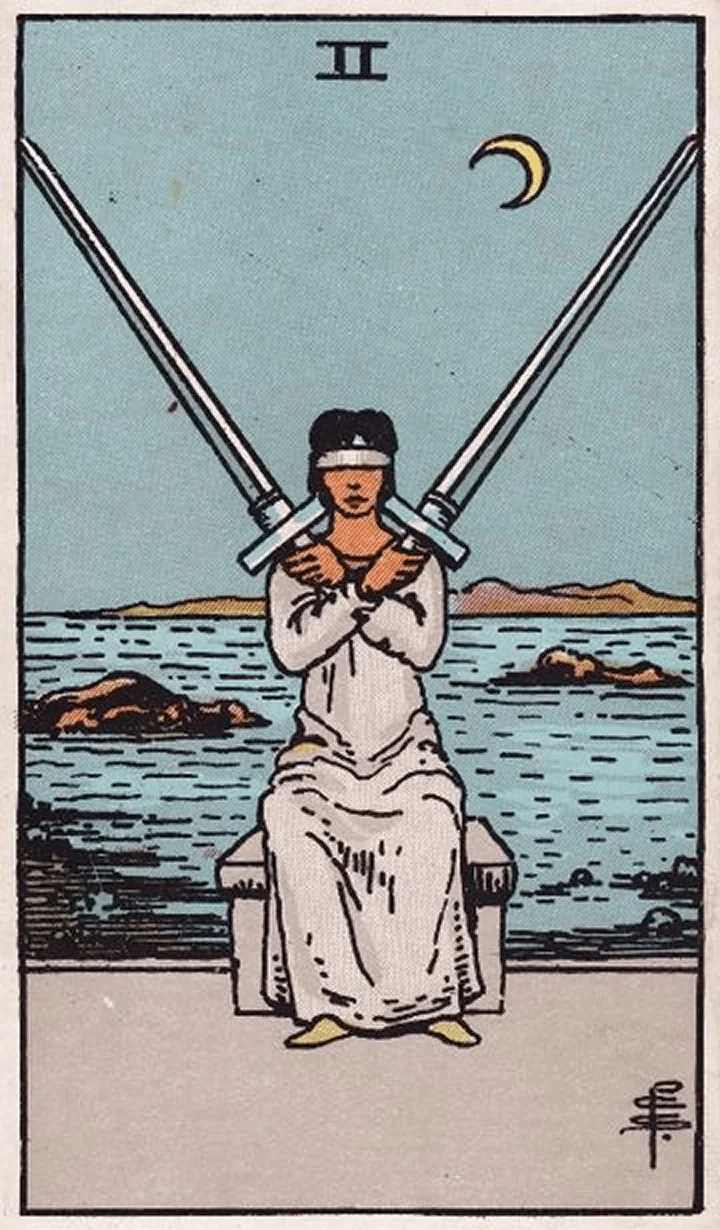
The card depicts a solitary male or female figure in a simple shirt. The person sits on a solid cubic pedestal, emphasizing the firm foundation of their beliefs and the steadfastness of their position. They will not get up from this pedestal and start acting, no matter how circumstances push them, until they themselves decide they are ready. The card reflects temporary inaction, external passivity, but a great deal of internal mental work.
This is emphasized by the night, the moon (sometimes waxing, sometimes waning), and a turbulent sea (but even calm water in any case reflects the element of emotions). However, the person has turned their back on this element and even blindfolded their eyes. The blindfold symbolizes concentration on the inner world, but also a lack of clear vision of the situation, a certain 'blindness.' Their posture is one of defense. They want to see nothing and demand to be left alone. They have no intention of being guided by their fears arising from external impressions.
The posture of the figure in canonical cards emphasizes perfect balance, despite the blindfold. The source of balance is exclusively internal, not external, sensations. The person tightly grips two swords in their hands. Sometimes with points up, sometimes down, sometimes in opposite directions, sometimes the swords are crossed, which enhances the impression of conflict and self-defense. This is a weapon, but for now, it is aimed at no one. When the assemblage point is flawlessly aligned based on principles, not external impressions, the person will stand up, remove the blindfold, and begin to act.
But for now, they refuse to do so in order not to make a mistake. At the same time, the main efforts are directed at restoring inner peace before moving on to any active actions. But all energy is spent on this—on not letting horror overwhelm them, on verifying and maintaining a certain internal state. Typically, this is suppressing a crisis in its bud—a struggle to prevent the situation from getting out of control and turning into a conflict. For this, the person on the card refrains from abrupt movements, centers on themselves, and does not allow dark and destructive forces to influence them, knock them off balance, or deprive them of objectivity.
In general, the main question posed by the Two of Swords is: WHAT are you closing your eyes to? One thing is if a person quite rightly immerses themselves in themselves, does internal work on self-reflection in reality, forming preparedness for current situations. This work may look like an ostrich policy from the outside—after all, there is so much to do, it needs to be done urgently! But everything is correct on the Arcanum—the person does not succumb to confusion, draws energy and strength from within, from their spiritual world, for reorganizing the situation.
Sometimes it is necessary to regain control over one's spiritual world before undertaking active actions in the external world. And quite another matter if a person wishes to protect themselves not so much from external pressure as from their own thoughts and feelings, which frighten and irritate them!
The person is cold, distrustful, skeptical, self-reliant. They will measure seven times before deciding there's no need to cut. At worst, they reject both their own and others' self-expression and let any feelings, be it love or anger, die in the backwaters of the soul. A characteristic feature of a Two of Swords person is that the question 'How do you feel?' is meaningless to them (unless it's about the flu).
Feelings don't really exist for them; it's just a way of speaking, and they don't even master it. The task of outwardly showing emotions and expressing feelings is something of a mission impossible. However, they can cooperate on an intellectual basis. On the one hand, there is nothing in their life that would seriously disturb them. On the other hand, they constantly experience anxiety about the most ordinary things and learn to suppress this anxiety so as not to lose control.
This is a great internal labor, consuming considerable energy, so there seems to be a shortage of it for many things—among them may be close communication, truly productive intellectual work, and much else that they might want to do. Hence, they are said to be 'indecisive'—meanwhile, that's all they are doing, deciding.
A dubious affair, a project that is constantly in question. Negotiations 'around and about,' in which both sides are afraid to show their cards (and see the other's—too). Any information seems questionable. Not knowing what to do next, a sense of deadlock. Lack of faith in one's own strength, perhaps due to a lack of recognition and appraisal.
Lack of clarity, uncertainty of prospects. Instability of the professional situation. Stalling in career advancement.
A deadlock related to differences of opinion. At best—adoption of a compromise decision and temporary resolution of some conflict. An attempt to fairly reconcile opposing views.
Cautious conduct of affairs, careful planning of each step. Doubts about whether one should engage in this work at all ('Do I need this?'). Difficulties with concentration, problems analyzing issues.
Sometimes it may describe unity, but still, it is more of a fragile alliance of competitors who know each other's worth than friendship among colleagues. Swords are not the best suit for human relationships; harmony here is conditional, superficial, and limited. This is a card of balance of forces in a tense situation (typical of the unspoken existence of two factions in an organization with strongly differing approaches to business).
Interruption of studies is possible with this card.
For some reason, the card is considered to relate to drawing, artistic talents, and capturing images.
Split, divergence in business and financial matters. Delay in payments, postponed deals are not excluded. In documents related to money, there may be their own 'pitfalls,' so they need careful analysis.
Relationships under the Two of Swords are questionable—in every sense. They are not particularly strong, and the person asks themselves various questions about them, which can manifest in endless internal dialogues with themselves or the partner's shadow. Distrust of the partner—and perhaps of oneself. Vacillations, skepticism, gnawing doubts. As a rule, there is confidence in nothing—not that these relationships should have been started, nor that there is any point in continuing them, nor that they should be ended... it's completely unknown what to do next. Sometimes there is a refusal to acknowledge the problem (hence, the figure on the Two of Swords typically has their eyes blindfolded). This can be a lack of recognition from the partner, or the reverse situation—an unwillingness to appreciate them at their true worth.
The most positive meaning attributed to the Two of Swords in the realm of relationships is the union of previously incompatible viewpoints, an alliance for achieving some common goal based on mutual benefit. The ability to make concessions, to reach a compromise. It is believed that in a negative card environment, the Two of Swords predicts the dissolution of this alliance or at least brewing problems within it. Generally, swords are not the best suit for human relationships, and here it may involve the emergence of more or less friendly interactions between those who, under other circumstances, could easily tear each other's heads off.
The Two of Swords can describe established diplomatic relations between two enemies: thus, people who couldn't stand each other might start communicating under its influence, rivals might conclude a non-aggression pact. Typically, there is some common goal. This could well be the behavior of divorced spouses during a joint outing with a child. Sometimes, emotional courage and openness, a kind of harmony, even closeness, can manifest in such relationships (especially if there are favorable Cups cards in the spread), but still, there's always a whiff of gunpowder around this couple. However, there are situations where objectivity and impartiality, replacing prejudice and antagonism, is already a huge step forward.
The patroness of the Two of Swords is considered to be Venus, and this planet needs no special introduction—it is most closely linked with relationships. However, in this case, behind their external plan lies an endless series of disagreements because the partners actually have completely different life perspectives (at least at this stage of development). In practice, it should be noted, the Two of Swords more often describes rival relationships than any others, and concepts like 'balance, harmony, peace' have a rather weak and conditional relation to it (a fictitious peace).
Therefore, it seems that Banzhaf and Akron, speaking of a 'beautiful model of relationships capable of weathering the strongest storms,' still greatly overestimate the potential of the Two of Swords. It is more of a delicate balance of forces in a tense situation.
Generally, under the Two of Swords, a person tends to keep their heart unattainable and impregnable. They deny both their own feelings and the feelings of the other, not accepting them. Describing a partner, this card says that they are ready to 'turn a blind eye' to the other's antics but are completely unsure of anything. Although traditional meanings of this card are 'agreement, friendship, tenderness, closeness, union, passion.' Regarding this Arcanum, there is certainly a point in collecting real-life observations!
In the upright position, the card relates to vision problems. The position of the hands on the card, protecting the chest, is also associated with problems of the respiratory or cardiovascular system. One meaning of the reversed Two of Swords is the fading of vital force in a person.
The first and most common interpretation is that a decision has already been made (and it may very well be by someone for the querent), the period of peace is over, it's time for active action. If the current situation is unsatisfactory, the person is ready to become a disturber of the peace, to disrupt the existing balance. As Mary Greer writes, 'You can open your eyes and see the truth, but it will be that you are living a lie.' There is sense in intervening in the situation, taking measures.
The second points to the risk of encountering deceit, betrayal, infidelity, perfidy, dishonorable behavior. This is 'serving two masters' with all the ensuing consequences. Inconstancy or duplicity on the part of an apparent partner, ally, or at least secretiveness. This could also be falling for a scam, encountering some swindlers, facing counterfeits, discrepancies, at worst—robbery. Duplicity of an apparent ally, 'fake' friends.
Erroneous, incorrect notions. Imposture. Divergence, rupture, dissolution of an alliance.
Another traditional meaning is lies, slander, gossip that harms reputation; in a milder case—ill-considered statements that create tension in some relations, tactlessness.
A poorly working head, difficulties with concentration, inability to see both sides of an issue, something is being missed.
The Fool – weakens the Two of Swords, bringing openness, ease, and defenselessness.
Justice – helps open the eyes and acknowledge the truth from which the Two of Swords defends.
The Wheel of Fortune – forces awakening to activity, exiting static waiting.
The Star – softens the action of the Two of Swords, instilling hope and dispelling fears.
The Moon – strengthens the Two of Swords, misunderstanding of reality, self-deception.
Nine of Wands – strengthens the motive of self-defense.
Seven of Swords – emphasizes escape from the truth.
With Four of Pentacles – hopeless situation, blockage.
Hermes as a symbol of the paradoxicality of the human 'I.'
Cards from the same group
Ace of Swords
Three of Swords
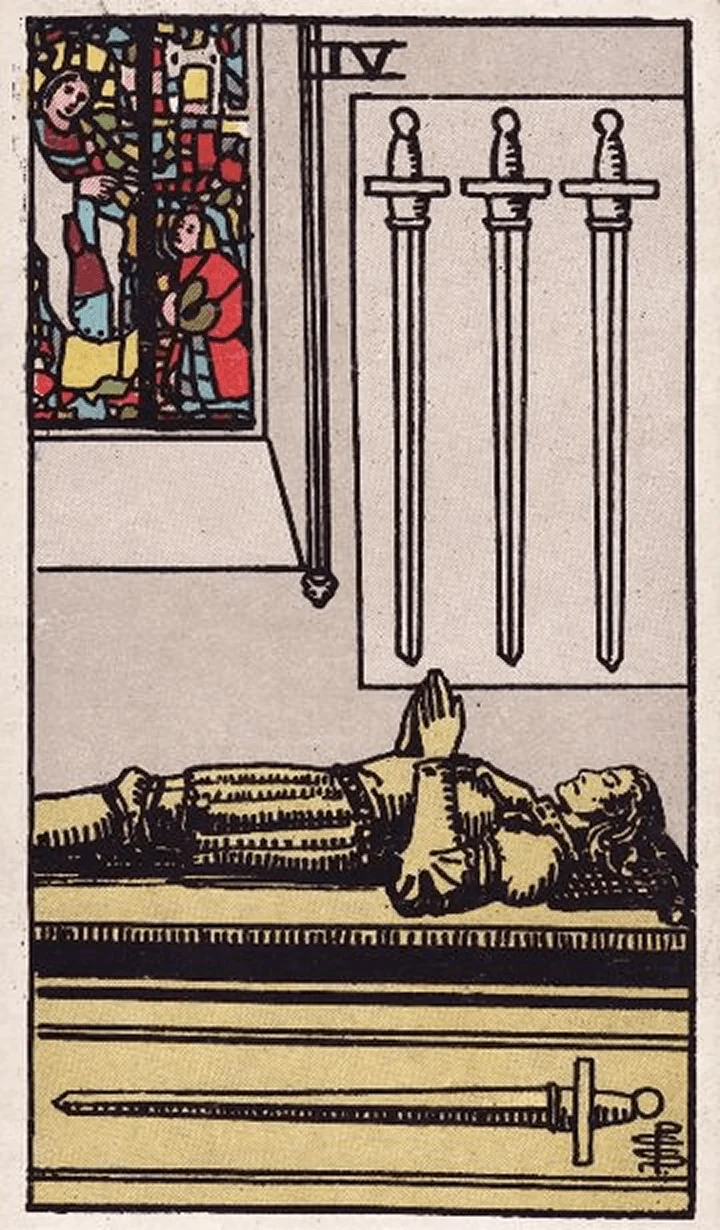
Four of Swords
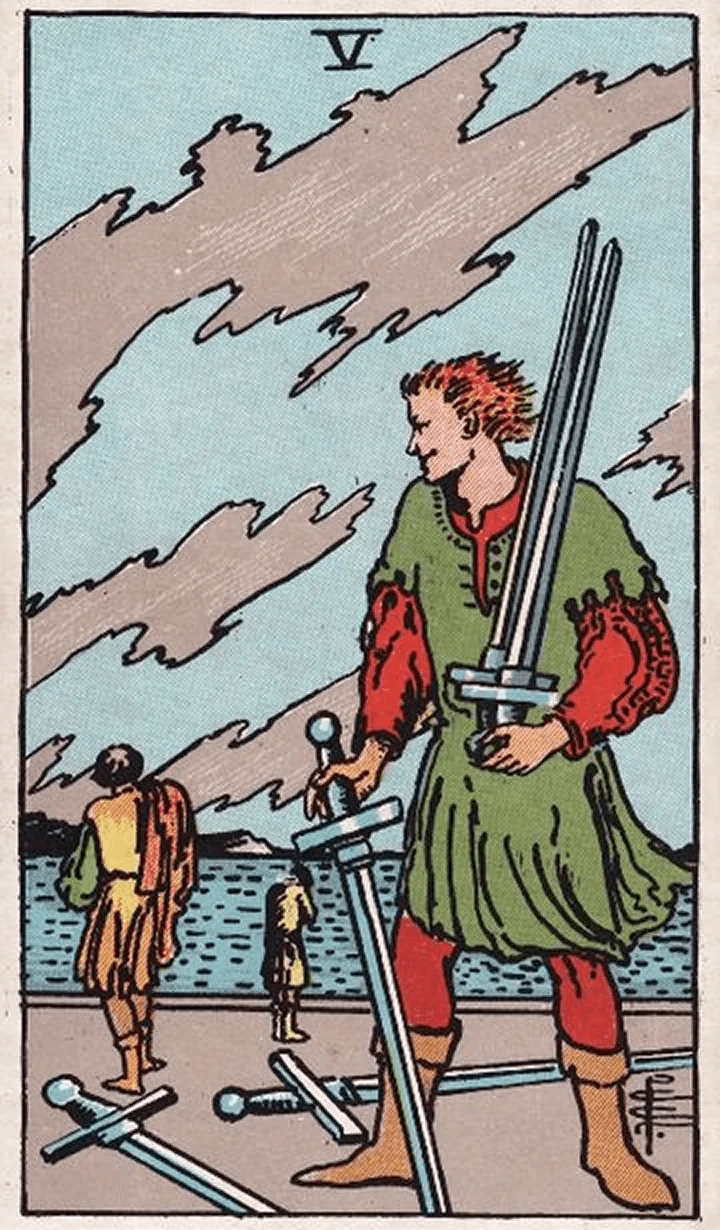
Five of Swords
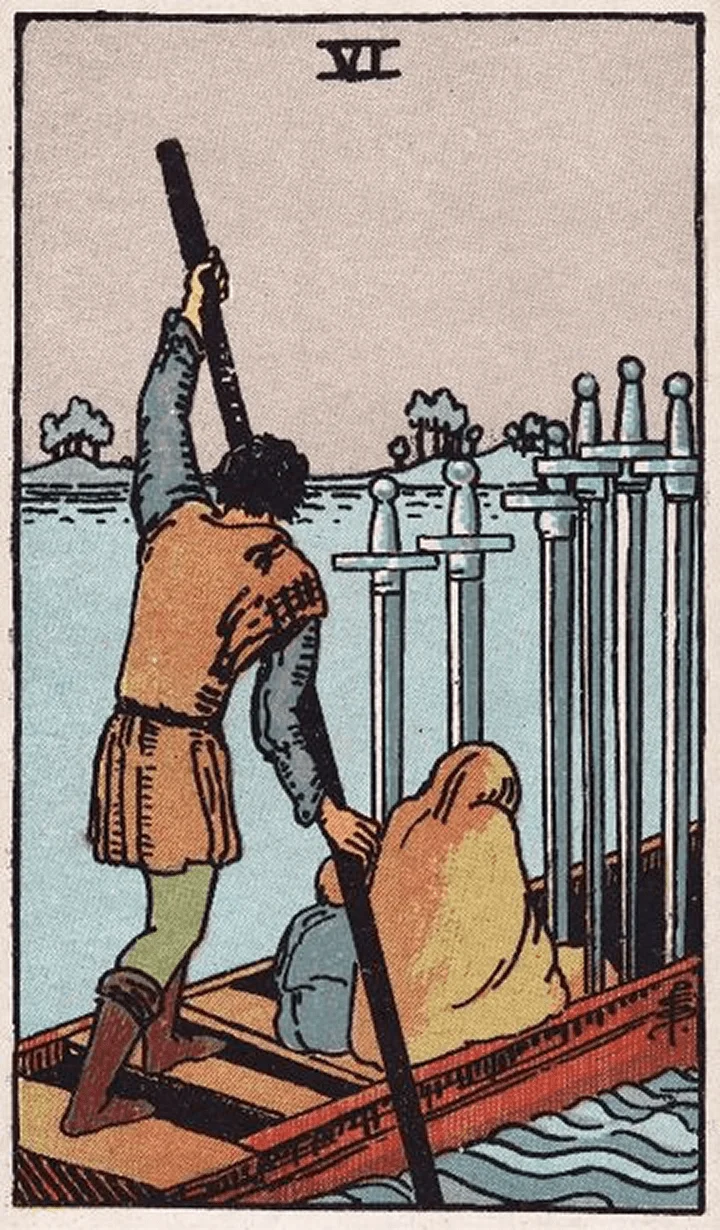
Six of Swords
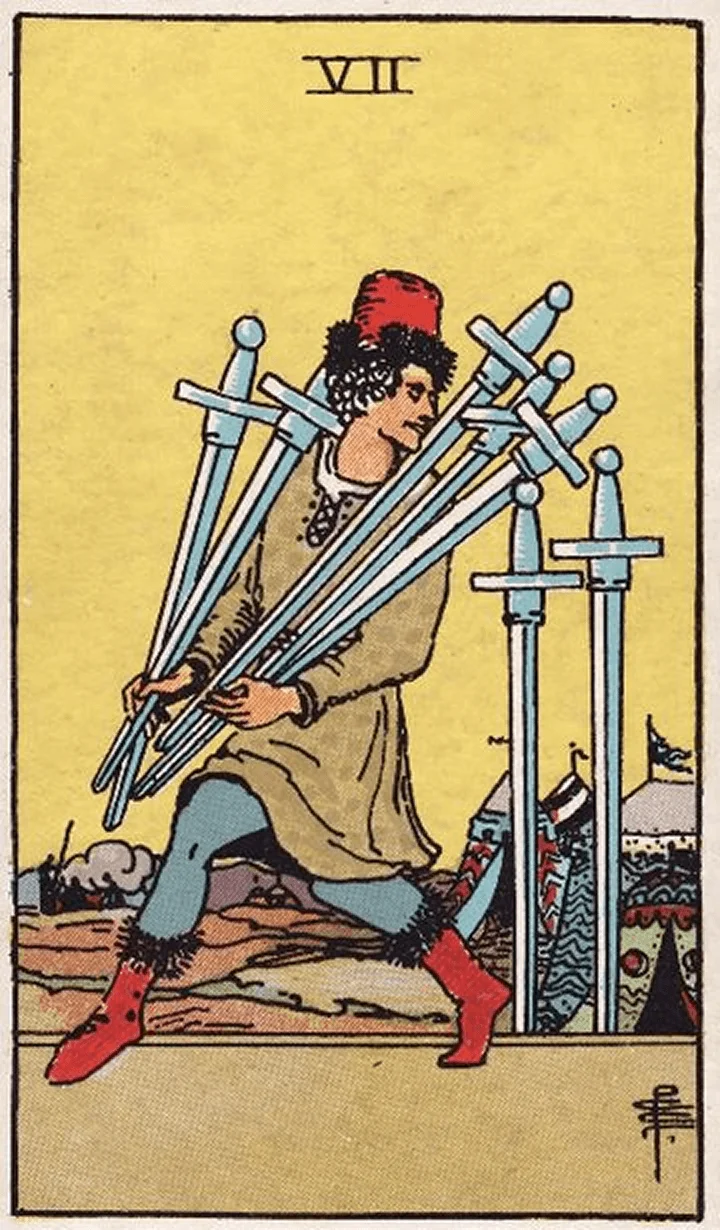
Seven of Swords
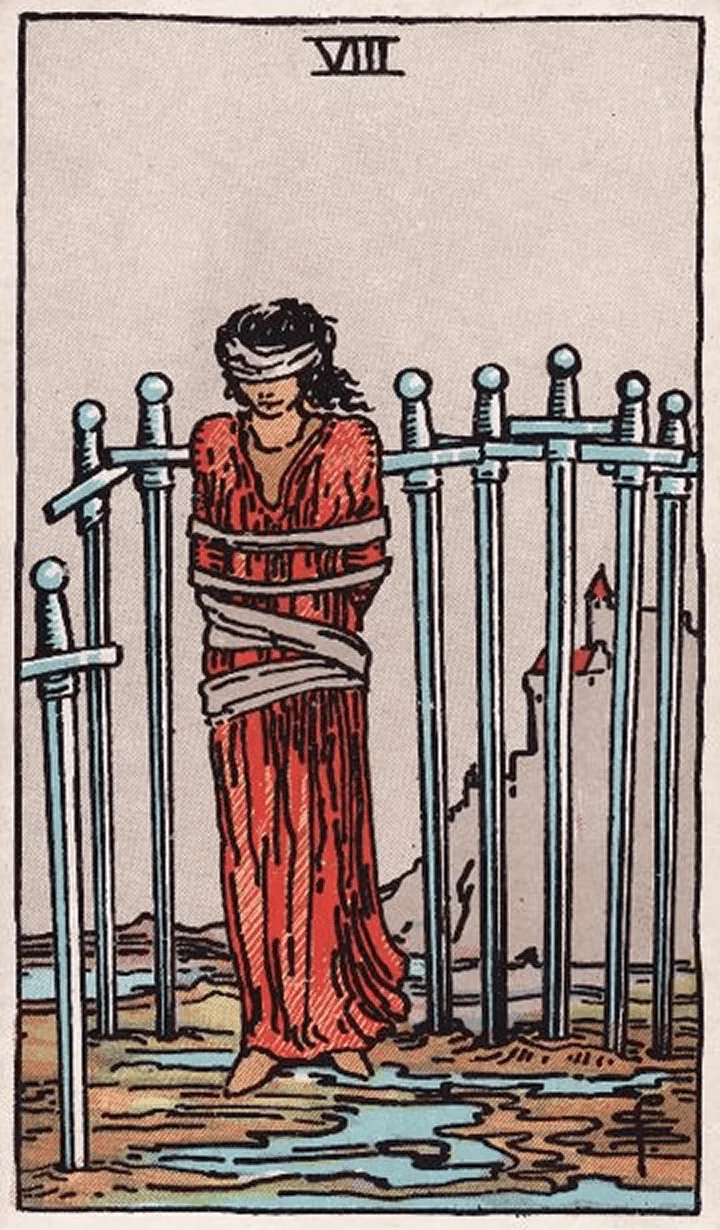
Eight of Swords
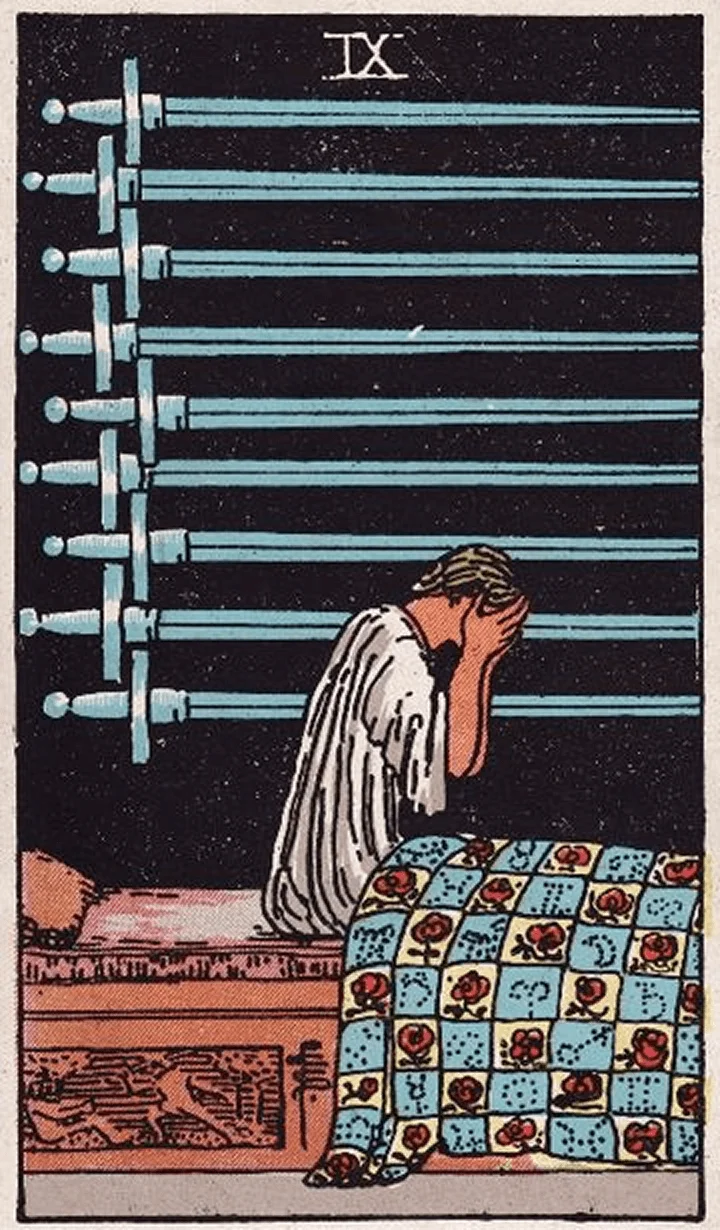
Nine of Swords
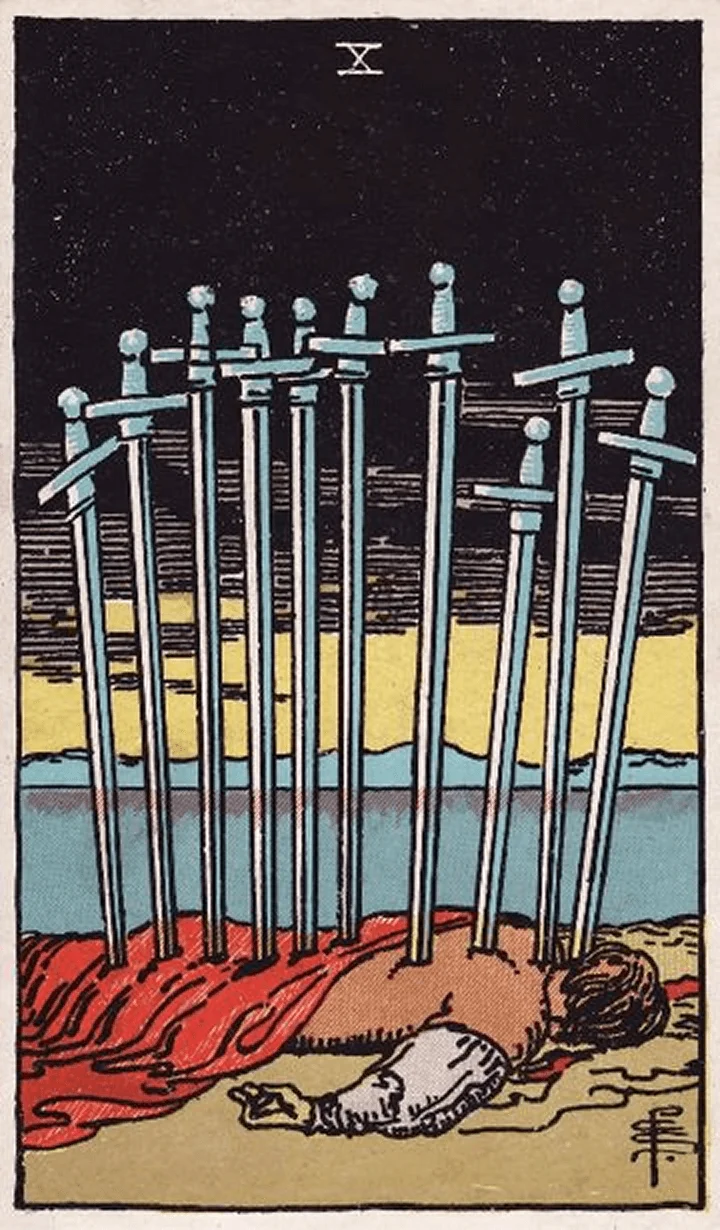
Ten of Swords
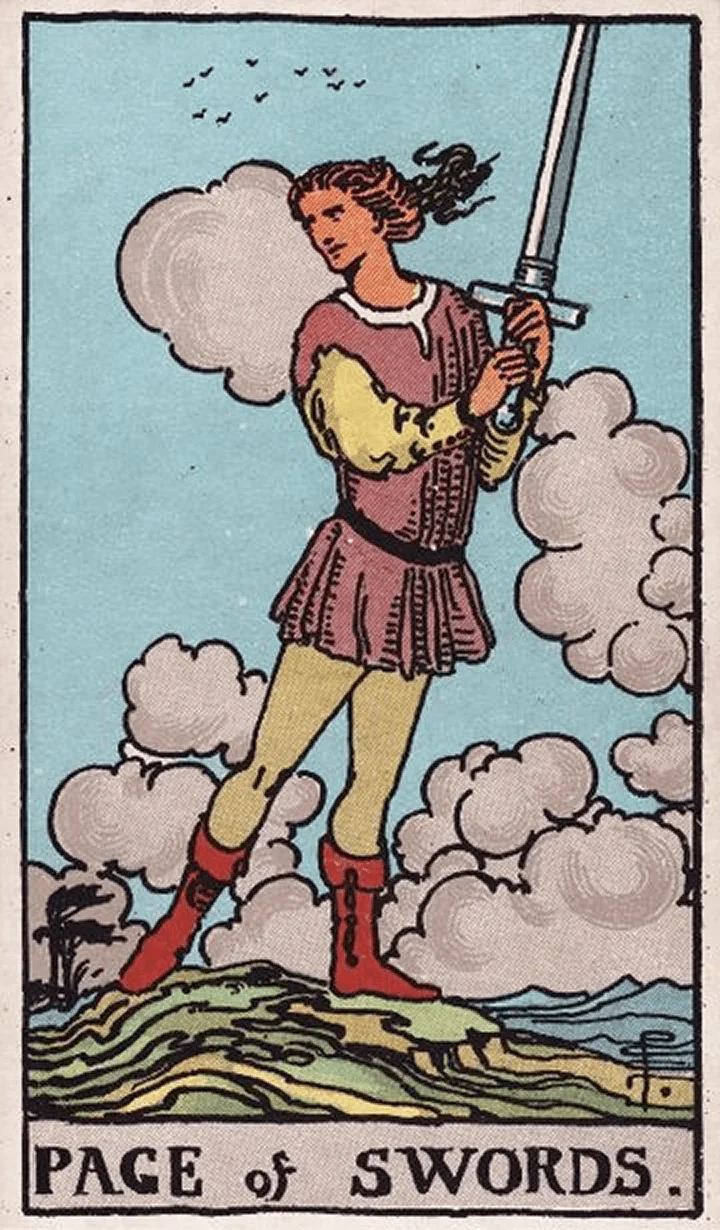
Page of Swords
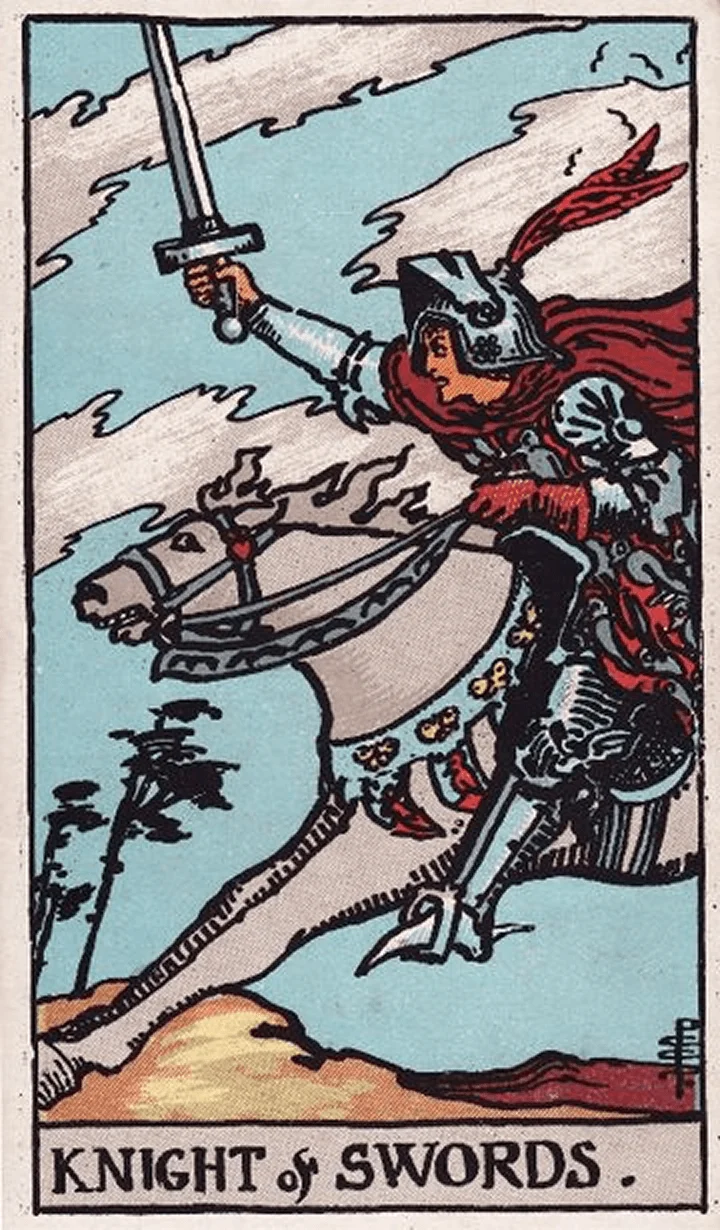
Knight of Swords
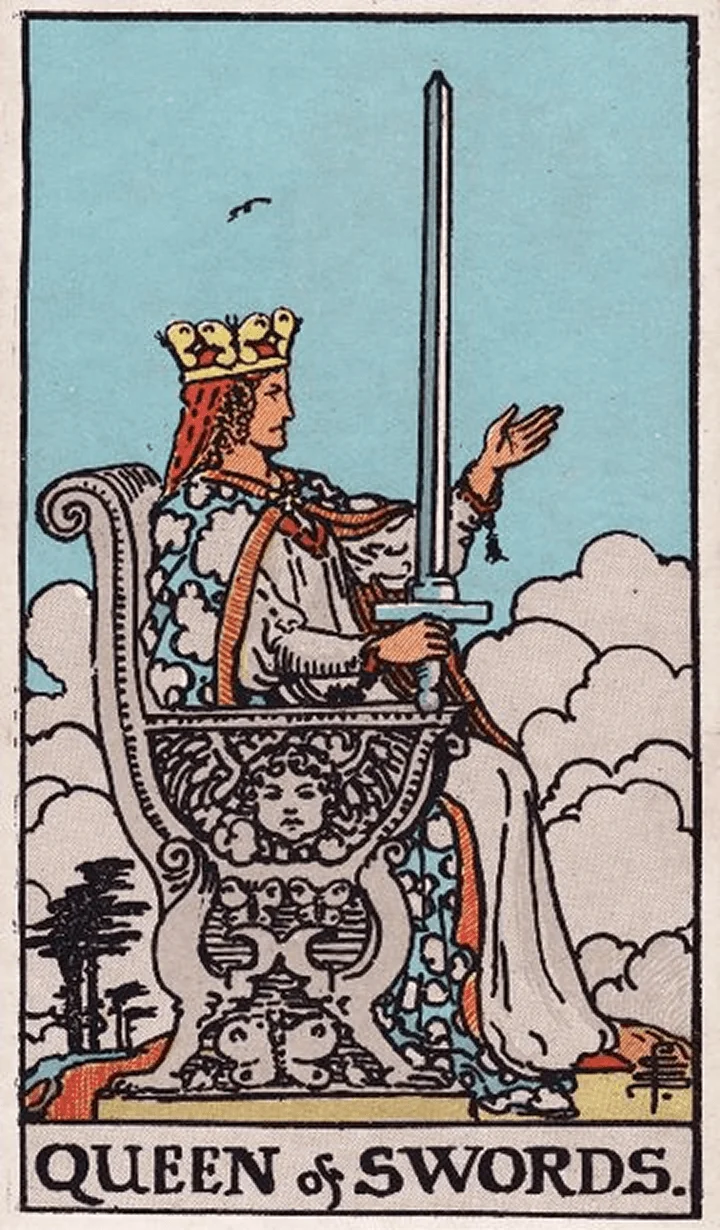
Queen of Swords