Wheel of Fortune
"Everything that happens is your destiny, and it is smiling on you!" Everything happens by the will of fate and everything is a gift of destiny.
"Everything that happens is your destiny, and it is smiling on you!" Everything happens by the will of fate and everything is a gift of destiny.
The appearance of the card says that the person's future is being decided NOW, BUT NOT AT ALL BY THEM THEMSELVES. This is a turning point in life, whether we want it or not. The Tenth Arcanum, appearing in a spread, may remind that the situation, whatever it is, good or bad, will sooner or later change, and it is now that the Wheel of Fate is gaining speed. Traditional meanings of the card—success, luck, happiness.
The card indicates that something will happen that we can hardly manage and could not have foreseen at all. The appearance of the Wheel of Fortune is an indication that dynamics have begun in life, which must be accepted philosophically (and neighboring cards may suggest where things are heading). But wherever they are heading, it is usually not about the result of any conscious efforts. One may have completely undeserved luck—this card predicts an unexpected smile of fate. However, to get lucky once, one must dare ('Fortune favors the brave').
To some, the Wheel of Fortune seems 'unjust,' but in fact it is simply another justice—accounts are settled at such a level where we cannot clearly compare cause and effect. What happens via the Wheel of Fortune seems to us a Chance—happy or fatal—but in fact there is nothing random here. Personifying Fate itself, the Wheel of Fortune possesses such power of karmic resolution that seems incomprehensible to us. Therefore, from our human point of view, the card rather speaks of Luck and Fortune, of happy unexpected opportunities, than of direct merits and the result of conscious labors.
Unexpected happy event. Luck, success, fortune, a chance that is given, perhaps once in a lifetime and not at all by chance. Unpredictable, fateful turn of events. Victory, successful overcoming of obstacles.
Some authors believe that the Wheel of Fortune signals simply forces influencing the situation, and other cards in the spread show what these forces are and which way the wheel is turning, up or down. Or, if the overall situation the person is in now is unfavorable, then the cards in other positions can suggest what must be done at this moment to move to the other side of the Wheel, corresponding to ascent and success. But here one still should not overestimate our ability to 'turn' this wheel and direct its movement.
Perhaps one can agree that the interpretation of the Wheel of Fortune strongly depends on surrounding cards in the spread, but here too there is no consensus. Some believe that in the environment of negative and threatening cards it speaks of unexpected changes for the worse; the person has missed something in some way and luck is ready to turn away from them. But sometimes this meaning is rather attributed to the reversed card, and in the upright position the Wheel of Fortune remains 'luck'—at least in the sense that it will carry them out of all the troubles described by other cards.
Everything that can expand horizons both physically and spiritually is connected with this card: travel, change of place, receiving education, or the whirl of social life.
Adventurous!
The ability to act boldly and sometimes unpredictably, relying not only on calculation but also on luck. Infectious lightness, bravery, activity, and cheerfulness. A person described by the Tenth Arcanum usually also 'hits the mark.' Their life looks full and interesting, 'from ship to ball.' They seem to be a favorite of Fortune, a darling of fate.
Speaking of Fate, one usually recalls the word 'karma.' And with this word, in turn, the word 'task' is most often associated—karmic task, destiny.
The Wheel of Fortune can speak of a person who has realized their life task, acknowledged the existence of such, or at least passionately desires to find it. Via the Wheel of Fortune, a person realizes that they are a subject of Fate, a tributary of karma; everything that happens in their life is inscrutable but not accidental. The hand of fate guides them and in their life everything has its time. They understand the necessity of each new trial to reach a new spiritual level and are ready to accept their Fate and their Path with gratitude. In a bright manifestation—this is truly a chosen one, not belonging to themselves. They must fulfill their task, and their life on earth is scheduled by heaven by the hour (and the person's sense of time, feel for the moment, is usually also excellent). At the same time, they themselves may consider themselves terribly unpredictable and free, while to a spiritually insightful gaze it is visible that the person has zero degrees of freedom. The Wheel of Fortune also emphasizes faithfulness to oneself, one's calling, one's true 'I.'
The famous Hajo Banzhaf generally believes that this Arcanum should be called 'Superobjective' or 'Life Goal,' and its appearance in a spread unequivocally says it's time to carry out what is planned.
Among the minuses of the personal state described by the Wheel of Fortune are a tendency to cyclothymia (creative and active state periodically gives way to downturn and depression independent of the person's will and plans), some superficiality in relationships ('out of sight, out of mind'), and that very 'maybe' on which Russia 'has stood for ages—not shaken...not stirred...not moved!' The person is perceived by others as a phenomenon of nature, not quite animate and weakly predictable.
A stage in spiritual development when a person must realize the eternity of change, becoming and destruction, understand that the ways of fate are inscrutable and balance can only be found within oneself, following the example of the Stoics. Human power is not limitless; they can be powerless before fate. The Tenth Arcanum symbolizes Fate, and that says it all.
"By whose destinies you know."
Man proposes, God disposes. Providence is present and active in the environment of events and actions as the subtlest, all-pervading spirit. The Wheel of Fortune in a spread reminds that in life there are things on which no one can influence, things over which no one has power. It rolls inexorably forward, on its own course, and it is pointless to oppose the course of time and fate. Things change, even if the changes are undesirable.
Everything has its time, and each new trial is necessary for growth and self-realization. Everything consists of cycles and all cycles are necessary for development, even the unpleasant ones; moreover, each form of life has its opposite, as in the circle of astrological houses. One must look at things philosophically and not fixate on one's achievements (sooner or later a decline will come) or on one's failures (an upswing will follow), for this is the Wheel. Moral dizziness should be present neither at the peak nor in any other phase.
At medieval royal courts, in an era inclined to gloomy philosophizing (just consider the 'Dance of Death'!), jesters performed a highly instructive pantomime for monarchs with a large ball: when one jester climbed to the top, another ended up at the bottom. But then the ball made a new turn, and the exalted one was cast down. The meaning of the Wheel of Fortune is obvious here. It remains to add that, like the Ten of Swords (and, in general, the other Tens), the Tenth Arcanum especially favors 'kings'—people with great scope. This is the card of a person endowed with a mission, a calling, and the accompanying power of realization. They may give the impression of a favorite of Fortune; amazing things succeed for them, the world spreads out before them like a Persian carpet... up to a certain point. Then fate turns another side to them, and the higher the top point, the lower the fall seems. Examples of the fates of many historical figures, where brilliant triumphs alternated with ignominious failures—are reminders from the Wheel of Fortune of how relative everything is. Fortune smiled, Fortune turned away.... One must learn to accept this eternal dynamic with royal stoicism, placing oneself at the center of the axis around which the wheel revolves. In all elements of life there are pluses and minuses. Everything flows, so nothing should be considered fundamental. Everything is relative (and at the same time, nothing is accidental).
The highest gift of the Wheel of Fortune is the consciousness of the impermanence of both happiness and adversity. The number ten, signifying perfection, is at the same time the gateway to the new (zero follows one), a new beginning that will follow another turn of the Wheel. It rotates continuously, sowing joy and sorrow, life and death. The Arcanum teaches that the Wheel of life constantly turns and a person cannot influence it. It is also important to understand that the Wheel turns for everyone; we all walk under God.
The Wheel of Fortune always accentuates human powerlessness before fate and teaches that this is for the best. If everything were only according to our will and understanding, knots, probably, would never be untied at all. It is also important to understand that this lesson of our dependence and helplessness before it actually stimulates growth and maturation (remember the colossal experience of comprehension that Ivan Bezdomny went through after the conversation at Patriarch's Ponds about 'Man himself governs!').
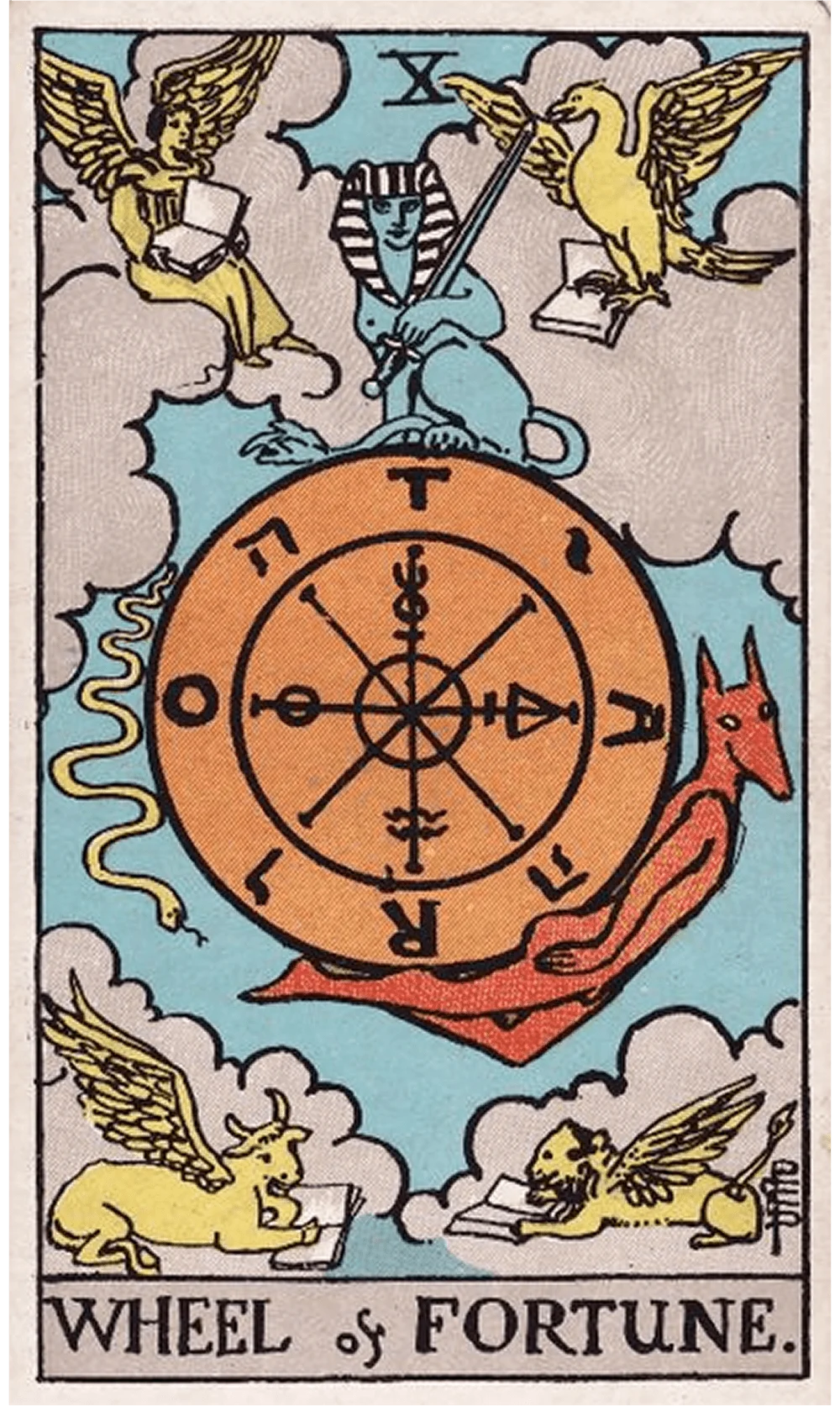
The Tenth Arcanum is considered a symbol of progress, and no progress comes free. It is the fruit of past and present efforts, passing valuable lessons, accumulating knowledge and wisdom. Perfecting oneself and everything around is a praiseworthy occupation, however not easy. According to Valentin Tomberg, the Tenth Arcanum represents the entire complex of ideas associated with the problems of Evolution and Involution, the Fall and Reintegration. This stage in development sets the task of Spiritual Alchemy, achieving inner unity (symbolized by the axis of the Wheel), through the transmutation of base instincts into their bright original prototypes (the Tetramorph on the card, the 'four beasts of the Apocalypse'). Moreover, this can be achieved by strictly observing the four Hermetic rules: To Know, To Dare, To Will, and To Keep Silent, corresponding to the four magical virtues (Knowledge, Courage, Will, Silence).
This is one of the 'apocalyptic cards,' depicting four mystical beings, the Great Axes of the Mystical Marriage. These four mystical beings—the Bull, the Lion, the Eagle (Scorpio), and the Human (Aquarius)—correspond to the fixed or unmovable cross of the Zodiac, reminding that spiritual reality is unchanging and eternal despite all radical turns and petty bustle of external life. This is eternal and cannot disappear. At the top, on the wheel, symbolizing the perfect balance of Universal Wisdom, sits the Sphinx with the Sword of Justice. The Sphinx symbolizes the human striving to solve the riddle of their fate, and if a person manages to solve this riddle of the Sphinx (about the cycle of life and death), then luck accompanies them for a time and they comprehend their path. But a person is not sufficiently objective and righteous, so they cannot stay at the top of the wheel all their life. Therefore, the advice of the Tenth Arcanum on a spiritual level: strive for the center of the wheel, to its only immovable point—your own 'I.' Stop and observe. In your inner world you will find answers to all your questions, looking at your problems with the eye of an outside observer and not trying to interfere with the course of events.
Here one wants to recall a certain wonderful doctor who repeatedly gave the sufferer amazing advice: 'Observe.' The advice used to bring people to a state of shock, but it turned out to be truly priceless both purely psychologically and from the point of view of further treatment.
As for the astrological analysis of the Arcanum, the planet Jupiter is mythologically associated with the secondary creator of the world, with the Star of Bethlehem that preceded the birth of Christ, and with the very name Yeshua, which in Kabbalistic-numeric representation is calculated as Kaph - Jupiter.
The essence is revealed by myths of dying and resurrecting gods, symbolizing the eternity of renewal and rebirth of nature. The eight axes of the Wheel of Fortune are connected with the traditional eightfold division of the year. It includes the first degrees of the cardinal signs (Aries, Cancer, Libra, and Capricorn) and the middle degrees of the fixed signs (Taurus, Leo, Scorpio, and Aquarius). The beginnings of the cardinal signs set the Spring Equinox (Ostara, Easter), Summer Solstice (Litha, Līgo-Jāņi, Midsummer's Eve, i.e., the Nativity of John the Baptist), Autumn Equinox (Modron, Michaelmas, Archangel Michael), and Winter Solstice (Yule, 'Spoke of the Wheel,' Midnight of the Year, Christmas). The middles of the fixed signs set Beltane (Walpurgis Night, Time of Herne, now Labor Day... well, it was a day of labor, only of a rather specific kind), Lughnasadh (Harvest Time, of the sun god Lugh, prophet Elijah on the fiery chariot), Samhain (now known as Halloween, All Hallows' Eve, time of spirits, veļu laiks), and Imbolc (festival of the fiery goddess Brigid, Bríd, now falling on Candlemas).
All natural cycles contain the idea of the Wheel of Rebirth. This image is present in practically all cultures. It is known, for example, as the Wheel of Samsara, the movement of the soul from life to life and the spiral evolution of consciousness. Through the Wheel of Fortune goes work with past life memories, practices related to a person's karmic heritage, the Alchemy of the Soul. What is experienced through the Wheel of Fortune possesses supernatural power of direct revelation; it is difficult to repress this information from consciousness.
In the Waite deck, the letters T-A-R-O are depicted on the Wheel of Fortune. The famous 20th-century occultist Paul Foster Case produced as many as four anagrams, obtaining the phrase 'Rota Taro Orat Tora Ator,' roughly translating to 'The Wheel of Tarot speaks of the laws of life.' And there is definitely a grain of truth in that.
Work by vocation, fulfillment of one's life task, mission. It may be about some project that is 'destined by fate,' and whether the person awaited it or tried with all their might to avoid it—that's another question. Some unexpected event may lead to a new path, even if before that the person planned their career completely differently.
Expansion, new opportunities, luck in affairs, and it will likely be a complete surprise rather than something planned.
Favorable turn of events, 'pure luck' (this can simply have enormous significance in some spheres of activity where everything depends on situations like 'he was accidentally noticed by The Great One Himself...').
Appearance of new resources, information, people (and with strongly unfavorable surrounding cards—disappearance).
Reward.
Broadening of horizons, openness to changes, upgrading qualifications. Sometimes the card says that the person strives to adjust to one or another life rhythm, 'fit in,' and at the same time spins like a squirrel in a wheel. These are all those workplaces where huge clocks usually hang on the wall, and everyone periodically throws an anxious glance at them. This is that very wheel: airport, television, news agencies, all those places where 'money never sleeps,' work continues 24/7 and show must go on no matter what. Often the person feels that they have no power over their professional activity—it has power over them. These are professions related to wide coverage, dissemination of information through mass media—producing, advertising, etc.
Casinos have a special relationship with the Tenth Arcanum, in general all those places where the principle of roulette operates, lotteries and drawings occur, and there is a possibility of random winning.
Work with some repeating cycles, seasons, models, where everything returns 'to its own circles,' but 'no two times are alike,' and last season's success does not guarantee luck in the new one.
This can also be an organization in the process of change: temporary (reorganization) or permanent (so-called learning organization, where constant change is a philosophy of life, and the mission is understood by all).
Often among meanings—the whirl of human interaction.
American tarot readers also include recycling, renewable resources here.
A feeling that there is no power to decide these matters, but usually—affairs are on the upswing, new opportunities present themselves.
Prosperity, improvement, success thanks to circumstances that may seem like pure luck. Possibility of an unexpected win.
Change of residence, moving.
At present, the person feels that in life everything remains as before and they are powerless to change anything, be it not very satisfying relationships or life without a partner. But via the Wheel of Fortune, changes are coming; personal life promises to improve, and there is no need to make any special efforts to gain the luck foretold by this card.
Everything will happen by itself when the time comes for it, and simply because the querent will be in the right place at the right time. An important aspect of this card is the person's faithfulness to themselves. In this case, happiness will find them; in any case, what happens to them will be what is most important. As they say, 'be firm, and here they will not betray you.'
Another important aspect of the card is the renunciation of influence and control, trust in the course of events. This applies both to single people and to those who would like to somehow change existing relationships. The Wheel of Fortune teaches that in any close relationships there exists a certain natural cycle; times of intoxicating closeness are replaced by periods of some alienation and emotional downturn, and one should not make a tragedy out of this and try to necessarily take it under control. The wave went out, the wave will come. Walk on the sand, holding hands. Everything will return to its own circles.
Via the Wheel of Fortune go so-called 'karmic relationships' or relationships about which one can say 'It's fate!' (which by no means guarantees cloudless happiness and does not exclude a very dramatic outcome). In this case, the person does not feel 'free' (i.e., not at all in control of their feelings); essentially, a task is laid upon them from which it is impossible to shirk, for this person is indeed their destiny. The connection becomes 'fatal'—though it is clear that the relationship is neither easy nor understandable, the attraction is supernatural, there is no choice and nowhere to retreat. The person can oppose nothing to this force—only follow it. Of course, such meetings turn out to be inevitable.
Here one cannot dodge one's happiness because synchronicity, coincidence, chance, and fate work at full power here. The Wheel of Fortune teaches that in life there is what 'just happens,' people find themselves in the right place at the right time, and 'it so happened,' plans were different. But also, one likely won't be able to control anything in these relationships. The fact that fate itself arranged them does not mean that it necessarily laid down straw. Outbursts of passion, breakups—everything will happen incomprehensibly; the person will feel as if they are being carried like a chip in a stream.
A person does not always understand what is good for them and what is not. Sometimes they suffer because something didn't happen as they imagined it. But in fact, what is happening to them is a gift of fate and optimally responds to the deep foundations of their being and the established conditions of development. The qualitative realization of the Wheel of Fortune depends on the actual karmic baggage of the specific person. But in general, this Arcanum foretells finding a suitable partner and happy development of the relationship. Sometimes—repetition of some scenario, returning to the old rut (both within one life and through incarnations). In this case, the Wheel of Fortune gives an opportunity to finally become aware of one's behavioral stereotypes in relationships with others, to catch some repeating gestalts, understand the causes of mistakes, sources of pain, nature of barriers. This is a precious gift. It is precisely thanks to it that a person sometimes manages to 'change fate,' to correct something, to do differently. And fate—it sees everything, hears everything.
Via the Wheel of Fortune go all sorts of 'jumping on the last train'—entering a marriage that the person long avoided, having offspring at the decline of reproductive years, and other steps of that sort.
As a rule—quite good health (especially in a favorable card environment), but with elements of cyclothymia (alternation of periods of uplift and decline of strength, mood swings).
There can also be dependence on some other cycles. For example, the cycle of an illness (exacerbations, remissions, relapses, so-called 'recurrence,' return, which happens both with some infections and mental illnesses). Seasonal allergies.
Seasonal affective disorders (usually still understood as depressions). By the way, the old name for depression or melancholy—'noonday demon'—clearly indicates a tie to time. The name originated in the Asia Minor region, where traditionally the hottest midday hours become the heaviest. Interestingly, in our latitudes too there are people who psychologically have a hard time with the 'noon of the year'—July and August.
The Wheel of Fortune also relates to another well-known cycle—the female cycle, describing phenomena associated with it (PMS, delays, weight fluctuations, and the like).
The Wheel of Fortune, however you turn it, remains a round Wheel. At the same time, there is a sea of variants for its interpretation in this position.
There is an opinion that if in the upright position it says: 'Fate!' then in the reversed it rather says: 'Not fate!' Plans will not come to fruition due to insurmountable circumstances for now; the time to take up this matter has not come; failures, obstacles, delays, misfortune, 'evil fate' await. Possibly, some old problems will surface!
Apparently, in the case of the reversed Wheel of Fortune, luck is ready to turn away from the querent and they should at least be more careful and not count on pure luck—it may not be enough.
Sometimes the card says that changes will have to wait; they will occur, but the moment for them has not arrived (again, 'not kairos,' not the moment, as with the reversed Eight of Wands). Delay caused by unexpected events. Other authors speak precisely of the inevitability of changes announced by the reversed Wheel of Fortune: if now it's a 'dark streak,' then soon everything will turn for the better, and if it's a light one, an inevitable worsening of the situation awaits; the streak of luck will end. In some cases, the card means resistance to changes that are still inevitable, or inappropriate actions regarding unexpected events. Inability to realize opening opportunities.
There are authors who believe that the reversed card does not change the meaning, and in material terms indicates profit and growth. Others point out that the unpredictability of the situation and the degree of risk sharply increase.
It is believed that Court cards near the Wheel of Fortune indicate people who will bring luck.
With The Fool—an explosive combination, foretelling imminent changes. Better refrain from gambling, entering into long-term partnerships, including marriage (many unforeseen factors will still surface).
With The Empress—pregnancy.
With The Chariot—a trip! This meaning will manifest almost inevitably.
With The Tower—major changes are near, which will be a complete surprise to the querent
With Four of Wands—favorable changes
With Six of Wands, Eight of Wands—rapid movement, swift development.
With Two of Swords—being at a dead end, inability to see the exit offered by fate.
With Four of Swords—the card is considered to a large degree blocking the action of the Wheel of Fortune with its energy of rest.
With Eight of Swords—strangely enough, also, rapidity of actions and changes, the card is considered enhancing the action.
With Four of Pentacles—blockage of changes, standing still.
With Seven of Pentacles—careful analysis of the situation before changing direction, lack of adventurousness.
Clotho, Lachesis, and Atropos, who dispose of the thread of human life.
The Norns.
"Your Honor, Lady Luck"
The myth of Oedipus
Seasonal magic rituals. Kipling's famous poem: If you can keep your head when all about you Are losing theirs and blaming it on you, If you can trust yourself when all men doubt you, But make allowance for their doubting too; If you can wait and not be tired by waiting, Or being lied about, don't deal in lies, Or being hated, don't give way to hating, And yet don't look too good, nor talk too wise: If you can dream—and not make dreams your master; If you can think—and not make thoughts your aim; If you can meet with Triumph and Disaster And treat those two impostors just the same; If you can bear to hear the truth you've spoken Twisted by knaves to make a trap for fools, Or watch the things you gave your life to, broken, And stoop and build 'em up with worn-out tools: If you can make one heap of all your winnings And risk it on one turn of pitch-and-toss, And lose, and start again at your beginnings And never breathe a word about your loss; If you can force your heart and nerve and sinew To serve your turn long after they are gone, And so hold on when there is nothing in you Except the Will which says to them: "Hold on!" If you can talk with crowds and keep your virtue, Or walk with Kings—nor lose the common touch, If neither foes nor loving friends can hurt you, If all men count with you, but none too much; If you can fill the unforgiving minute With sixty seconds' worth of distance run, Yours is the Earth and everything that's in it, And—which is more—you'll be a Man, my son!
card_wheel_of_fortune_archetypalCorrespondences_5
Cards from the same group
The Fool
The Magician
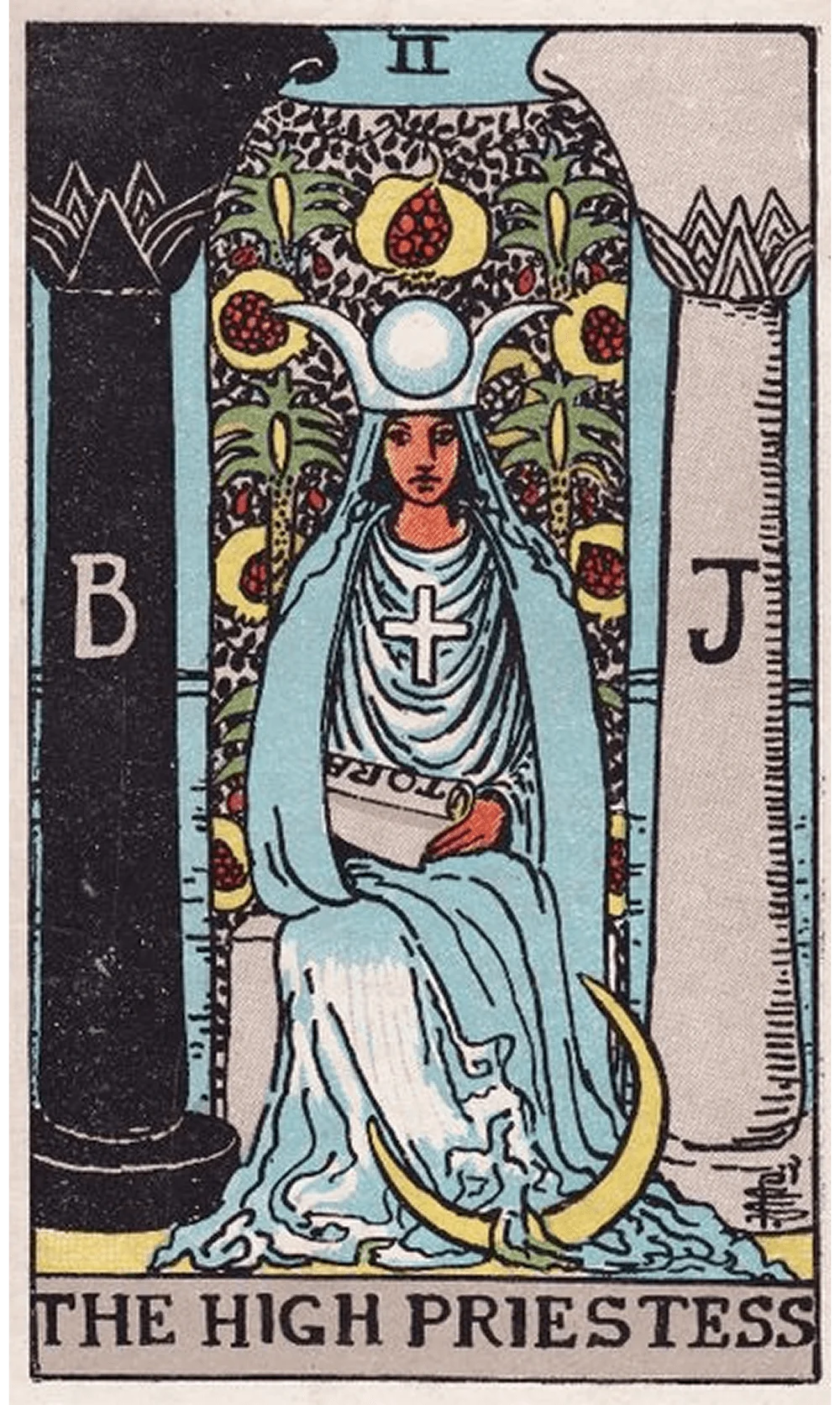
The High Priestess
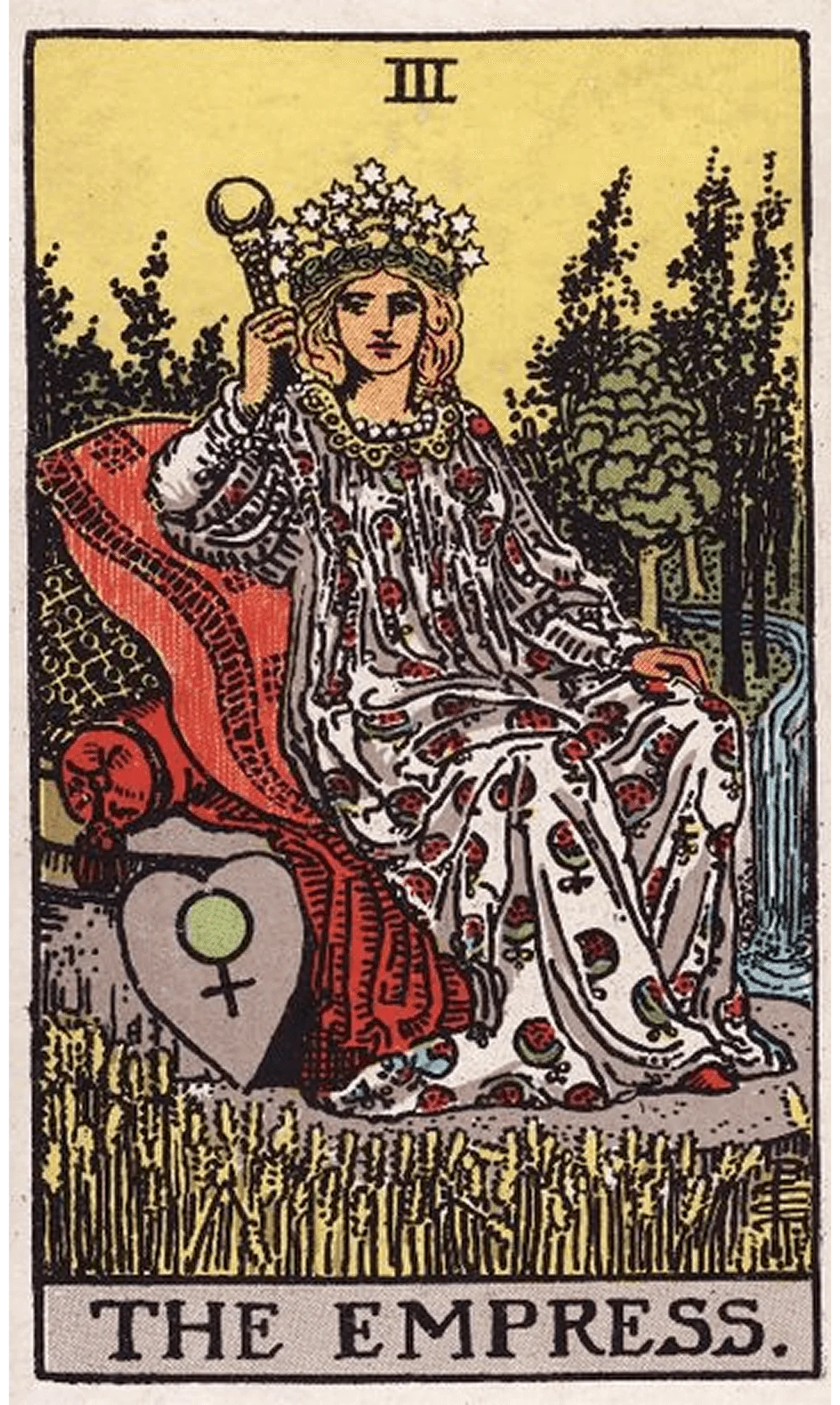
The Empress
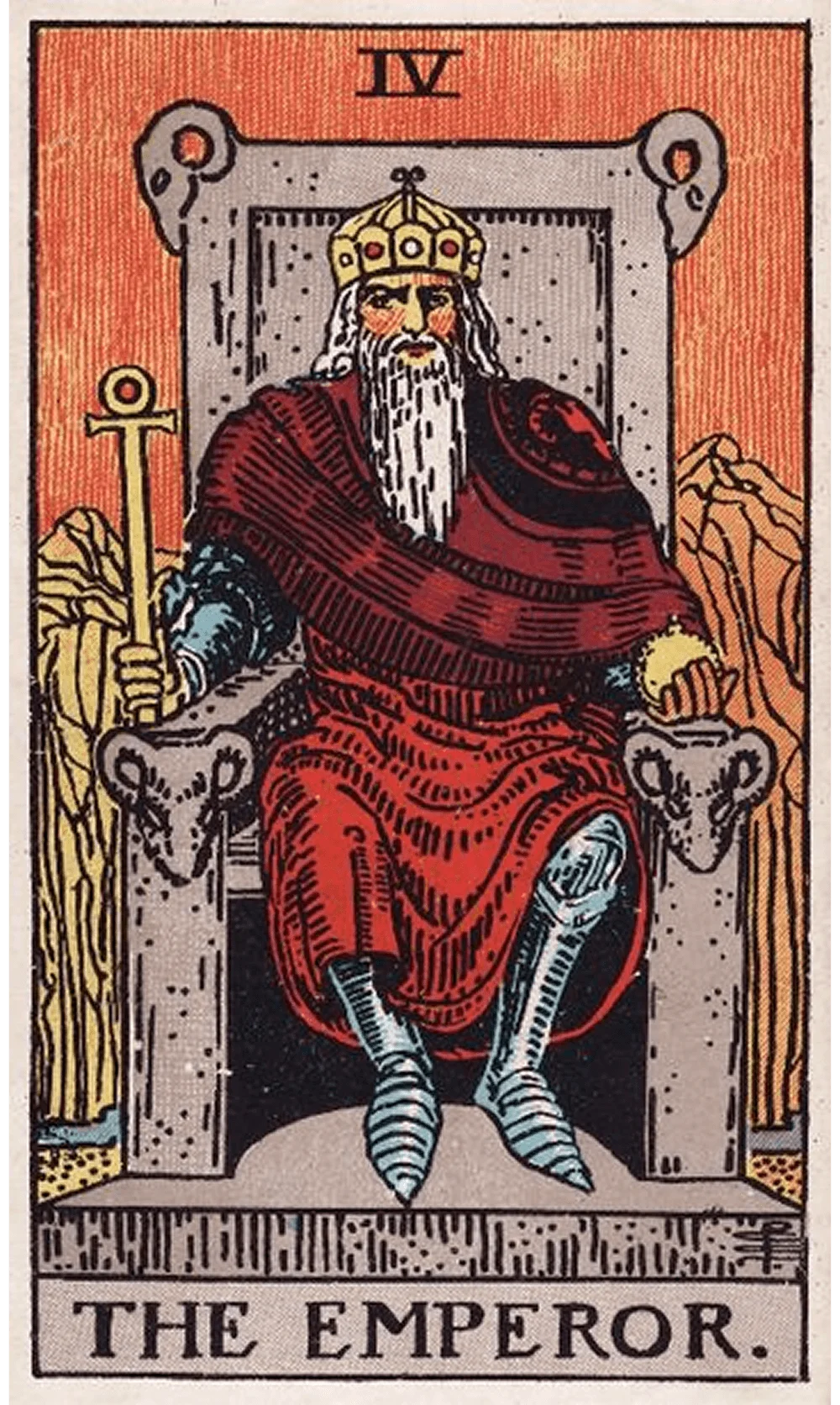
The Emperor
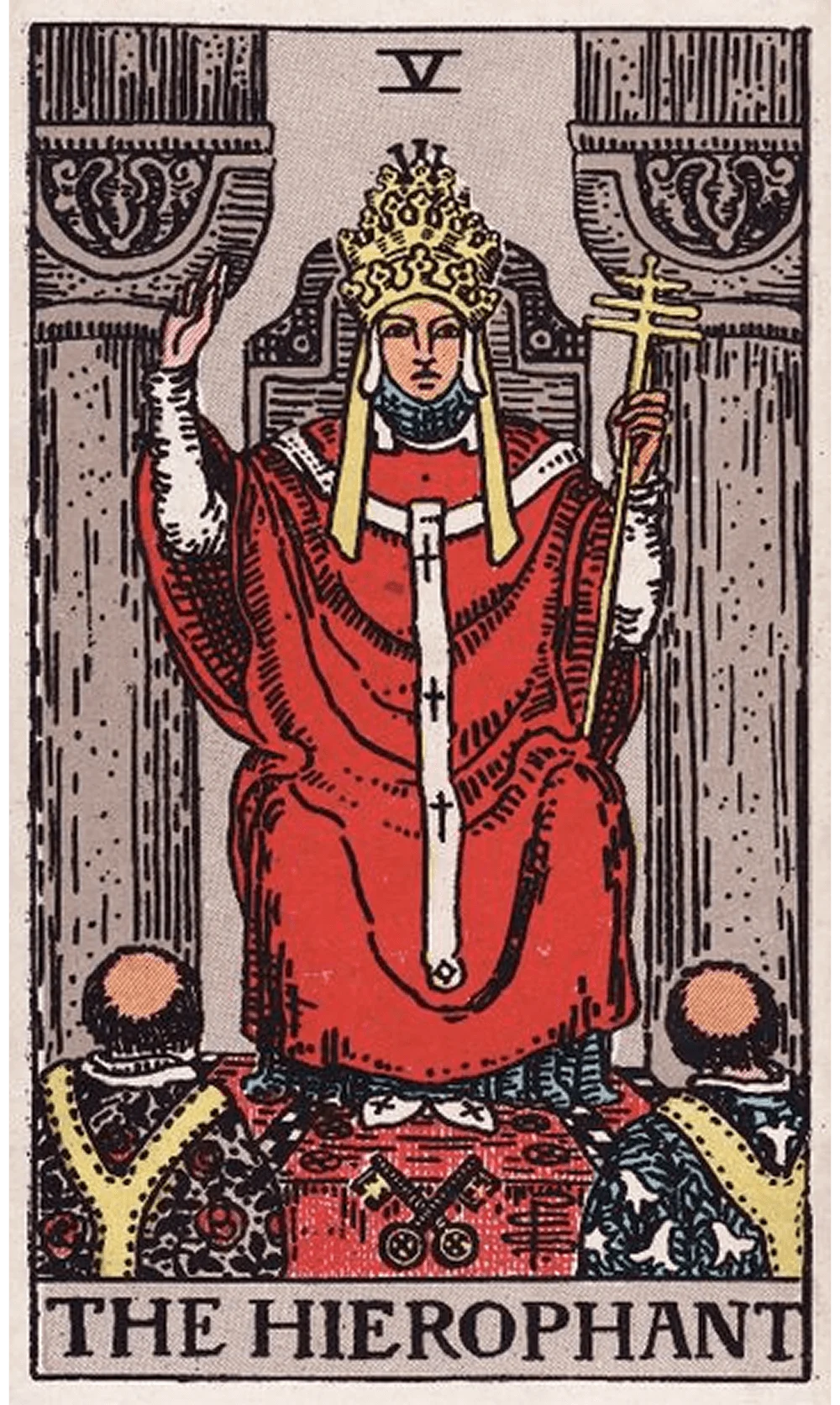
The Hierophant
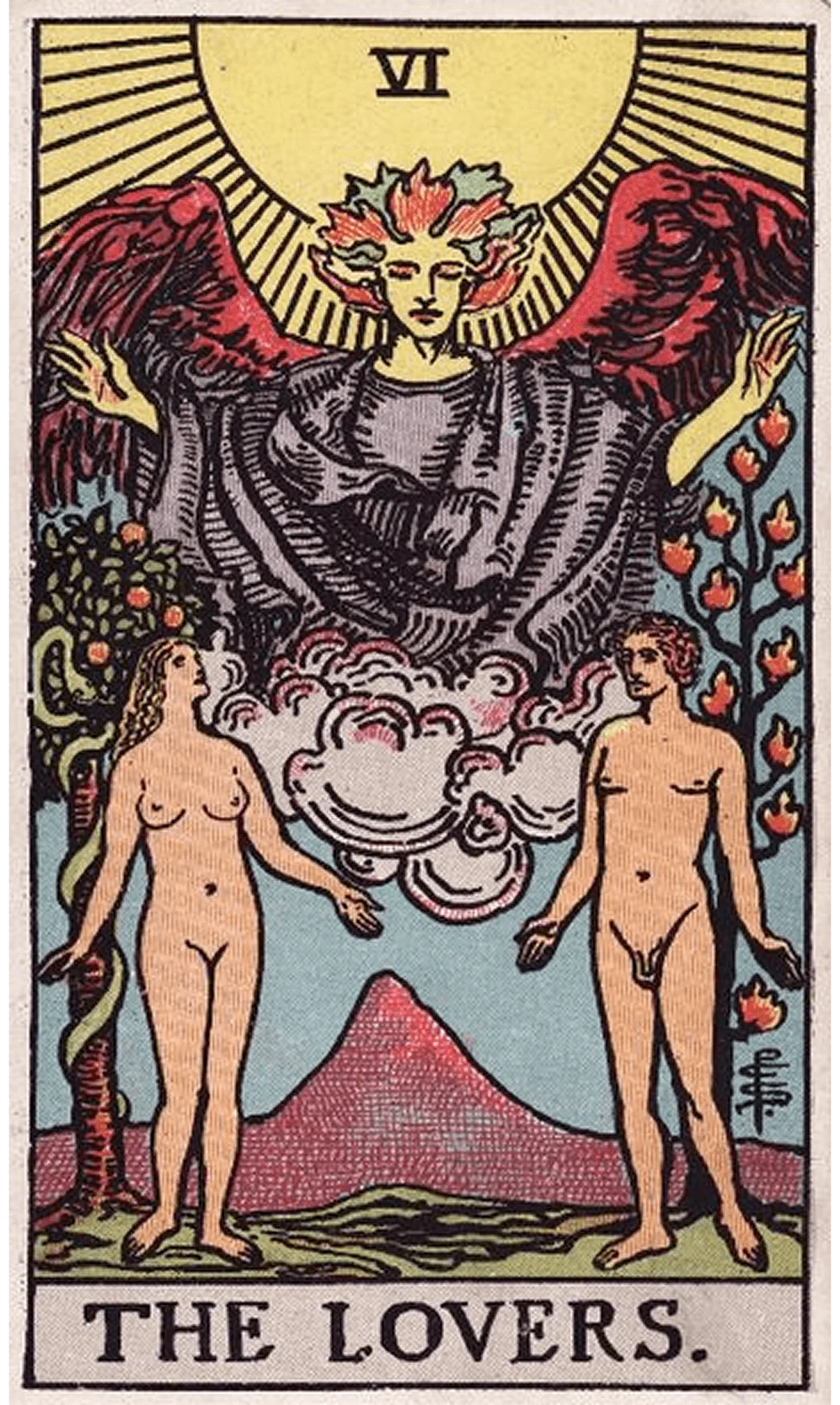
The Lovers
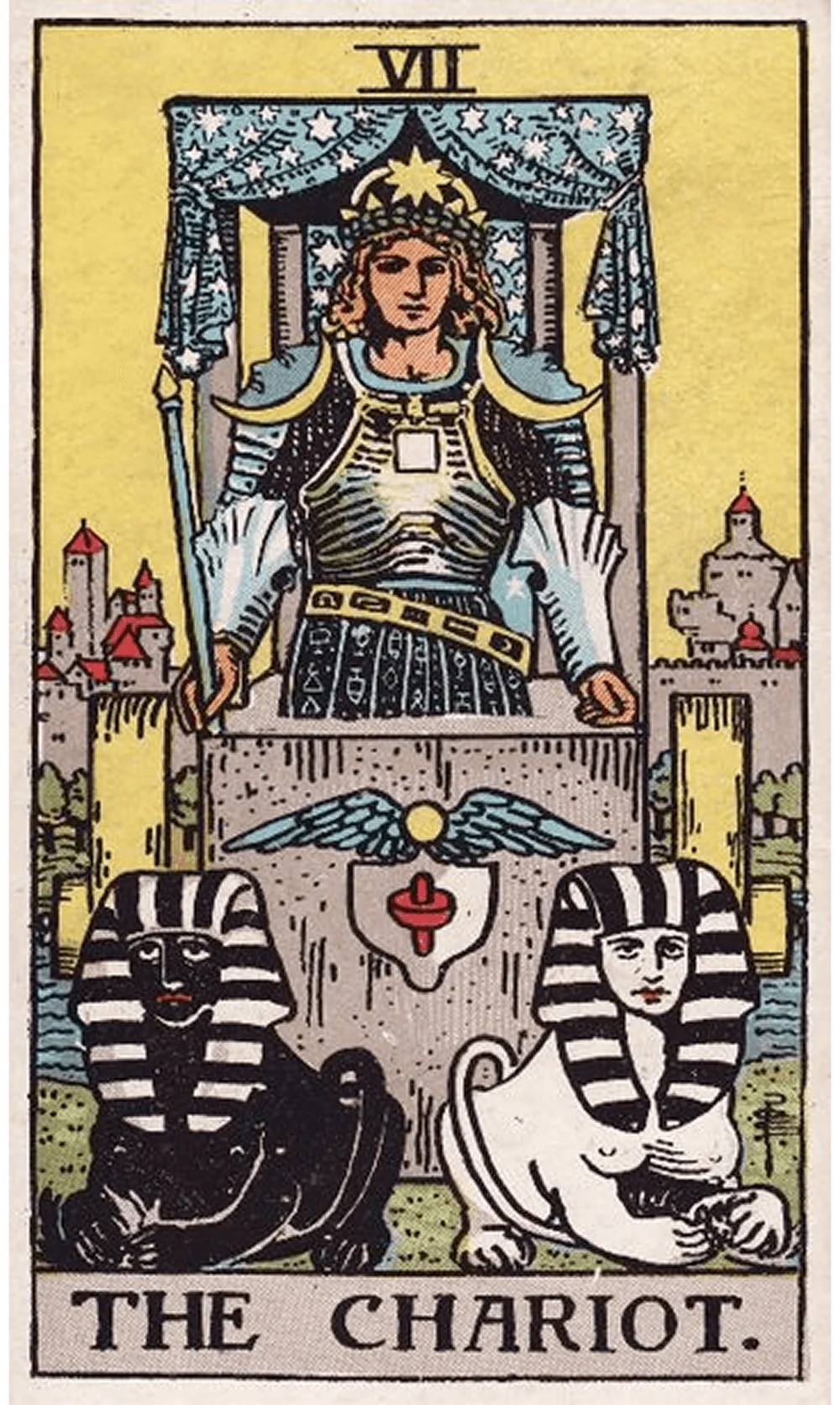
The Chariot
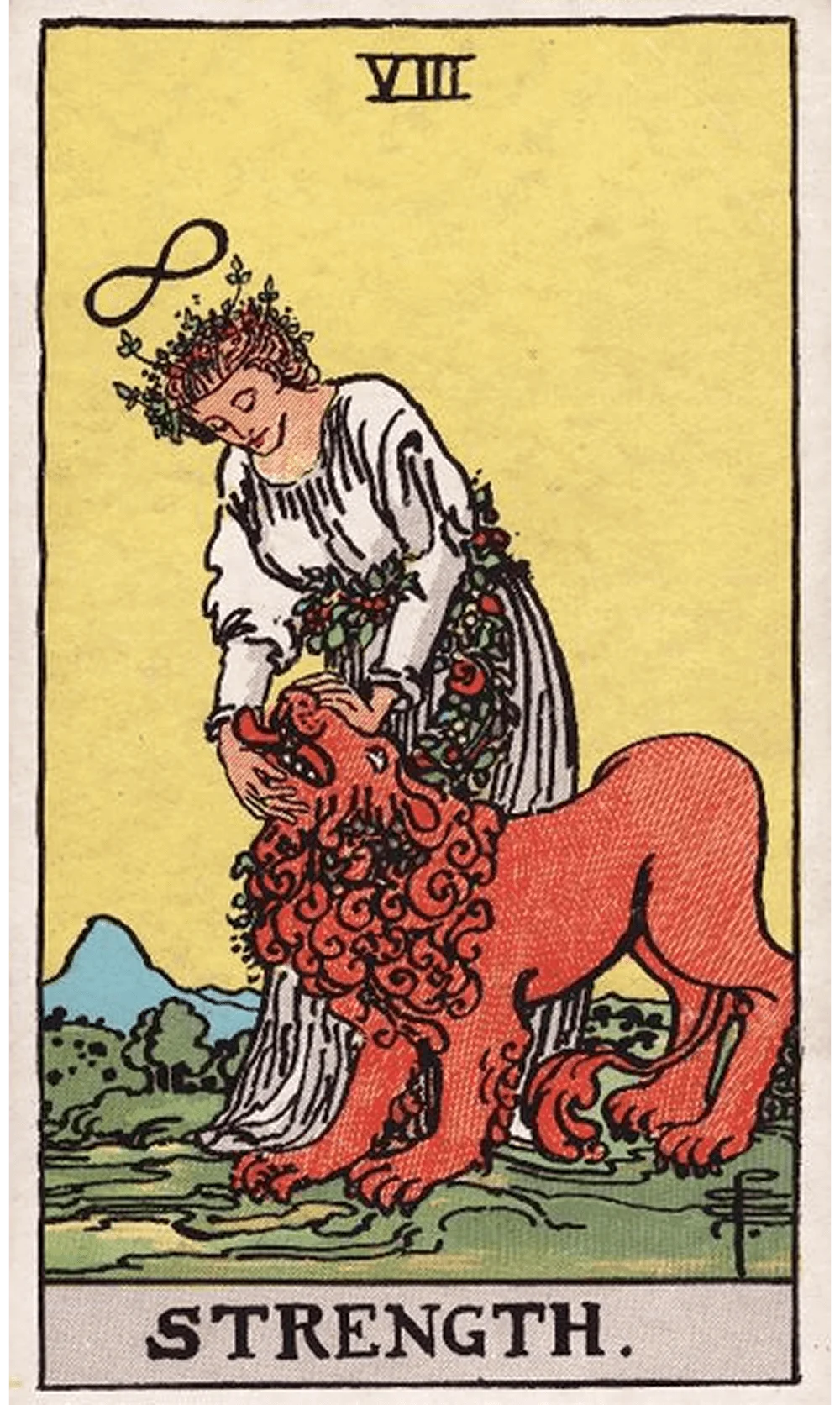
Strength
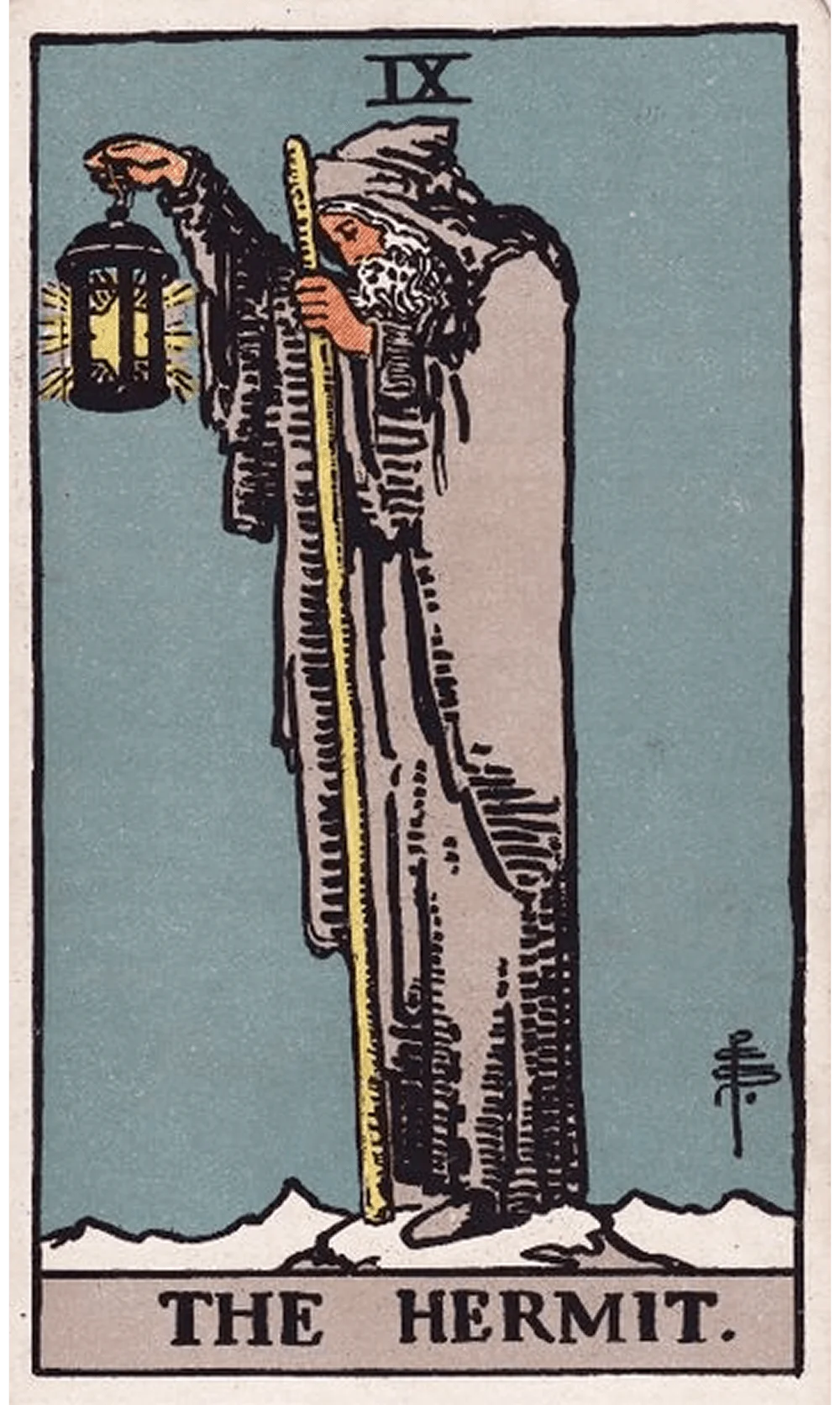
The Hermit
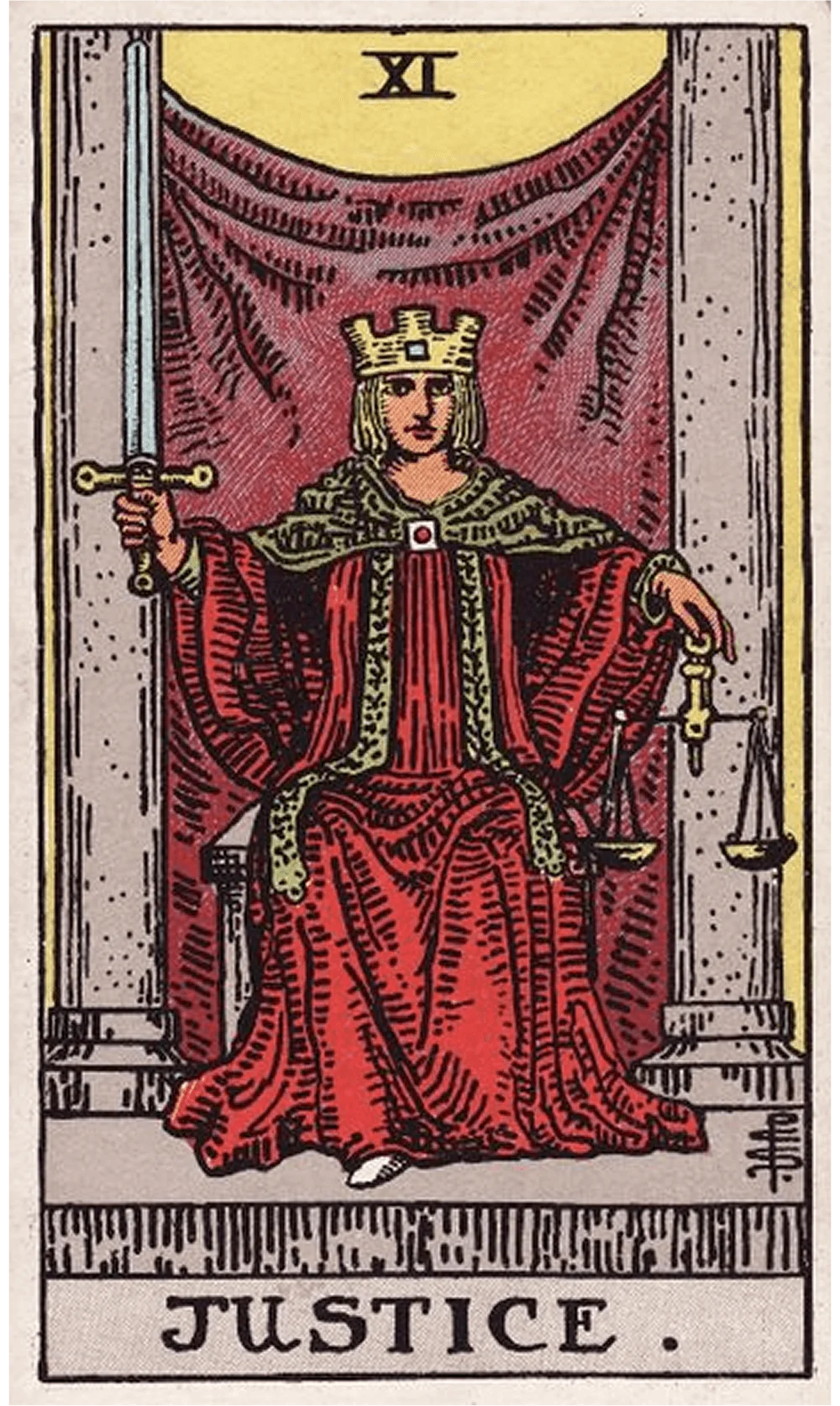
Justice
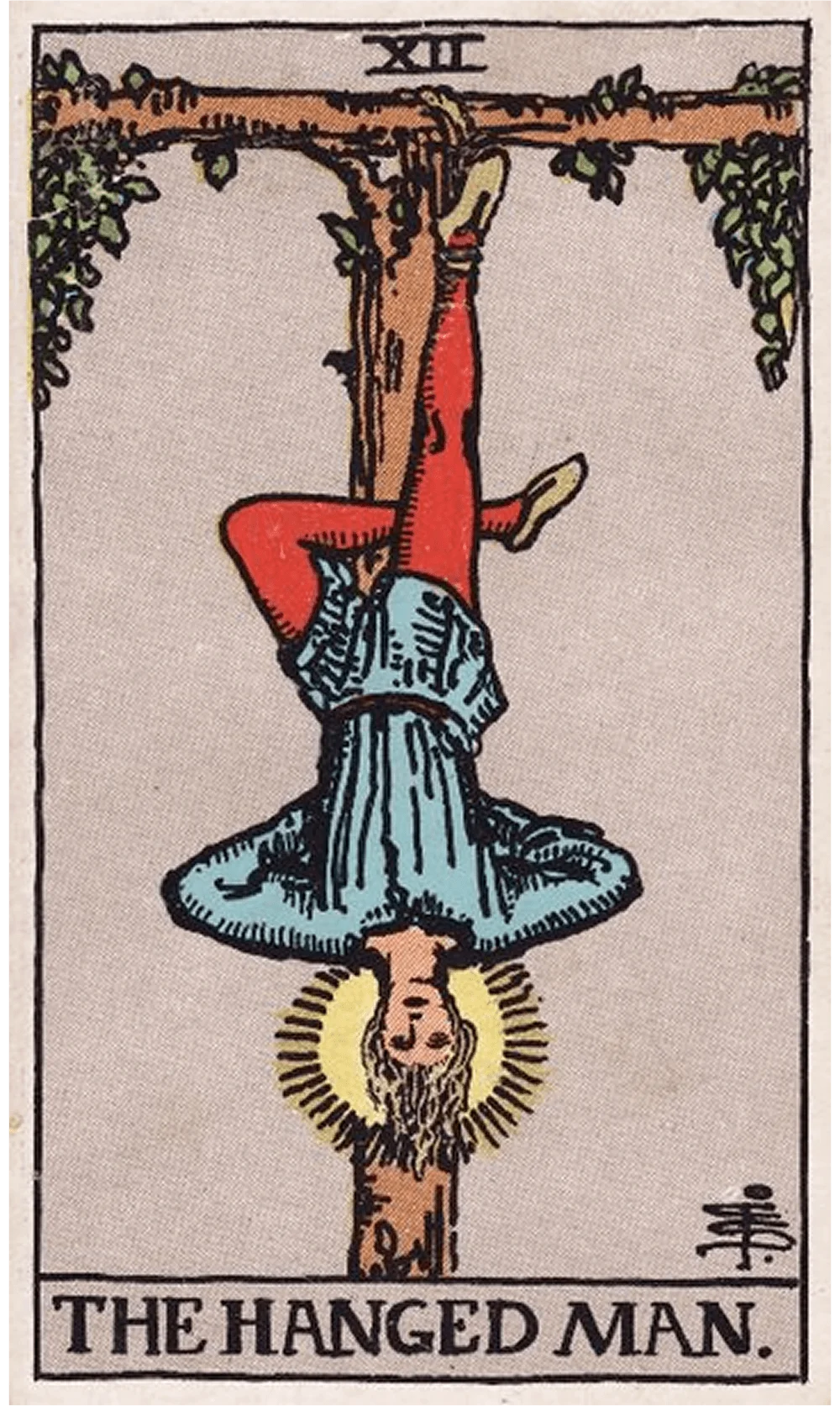
The Hanged Man
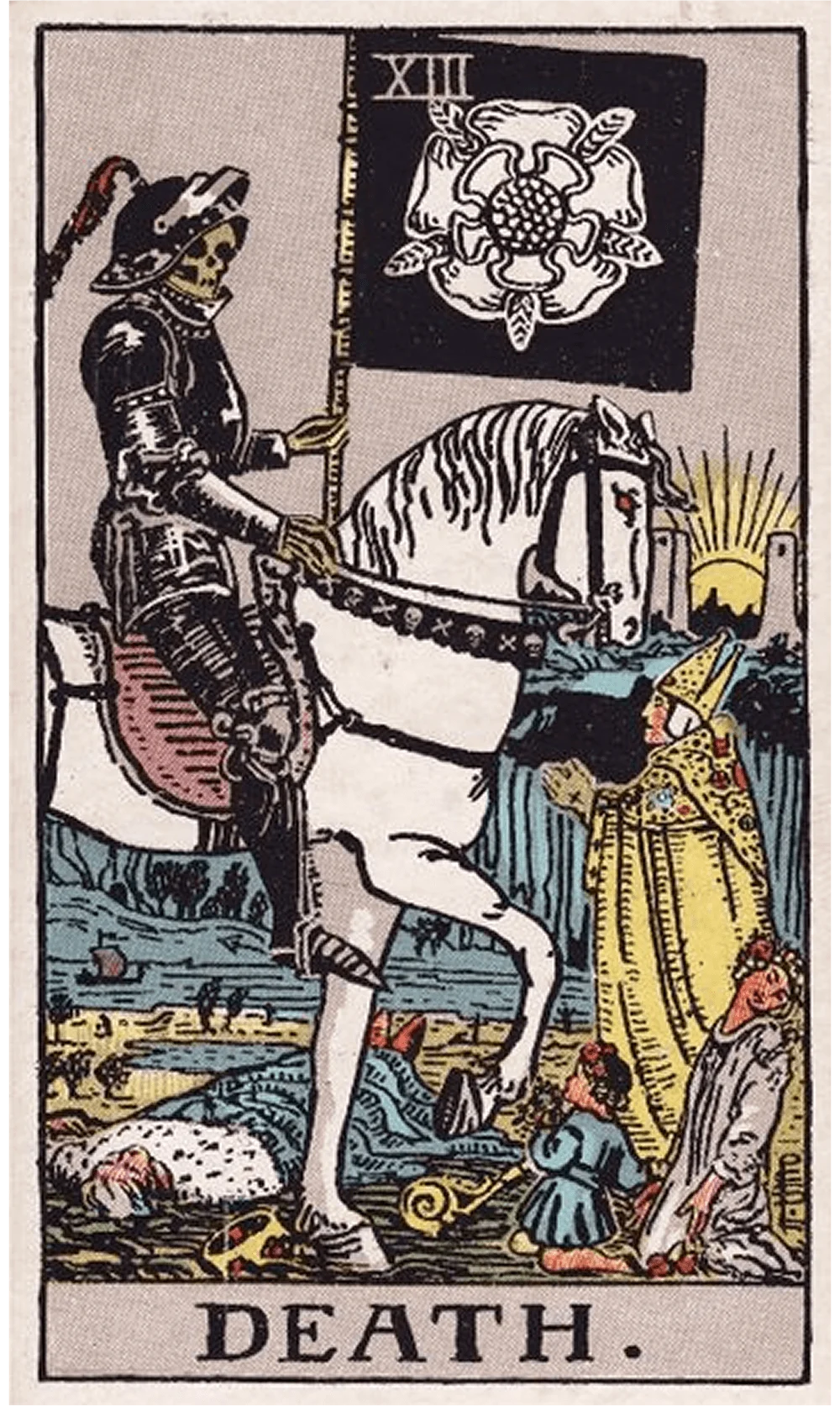
Death
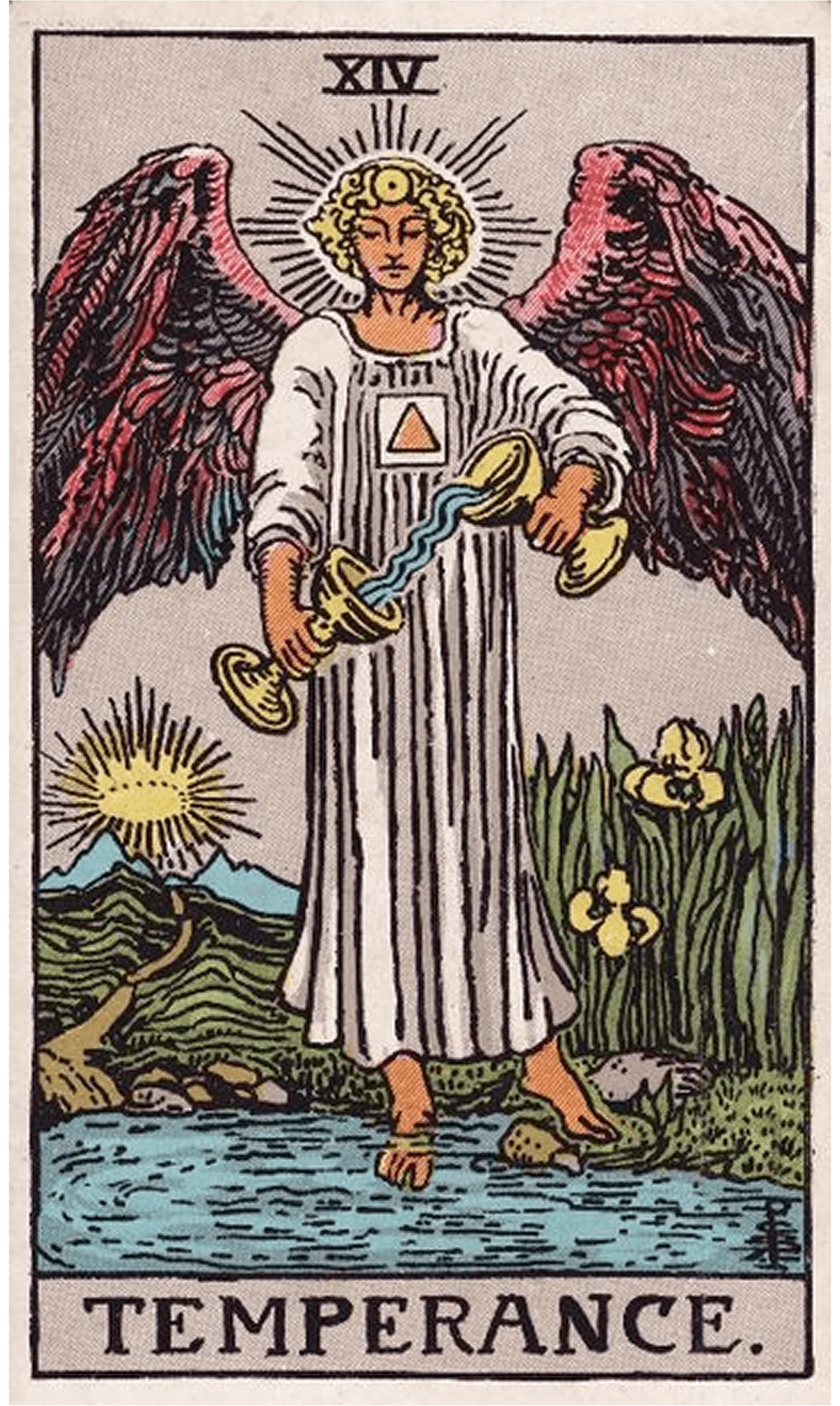
Temperance
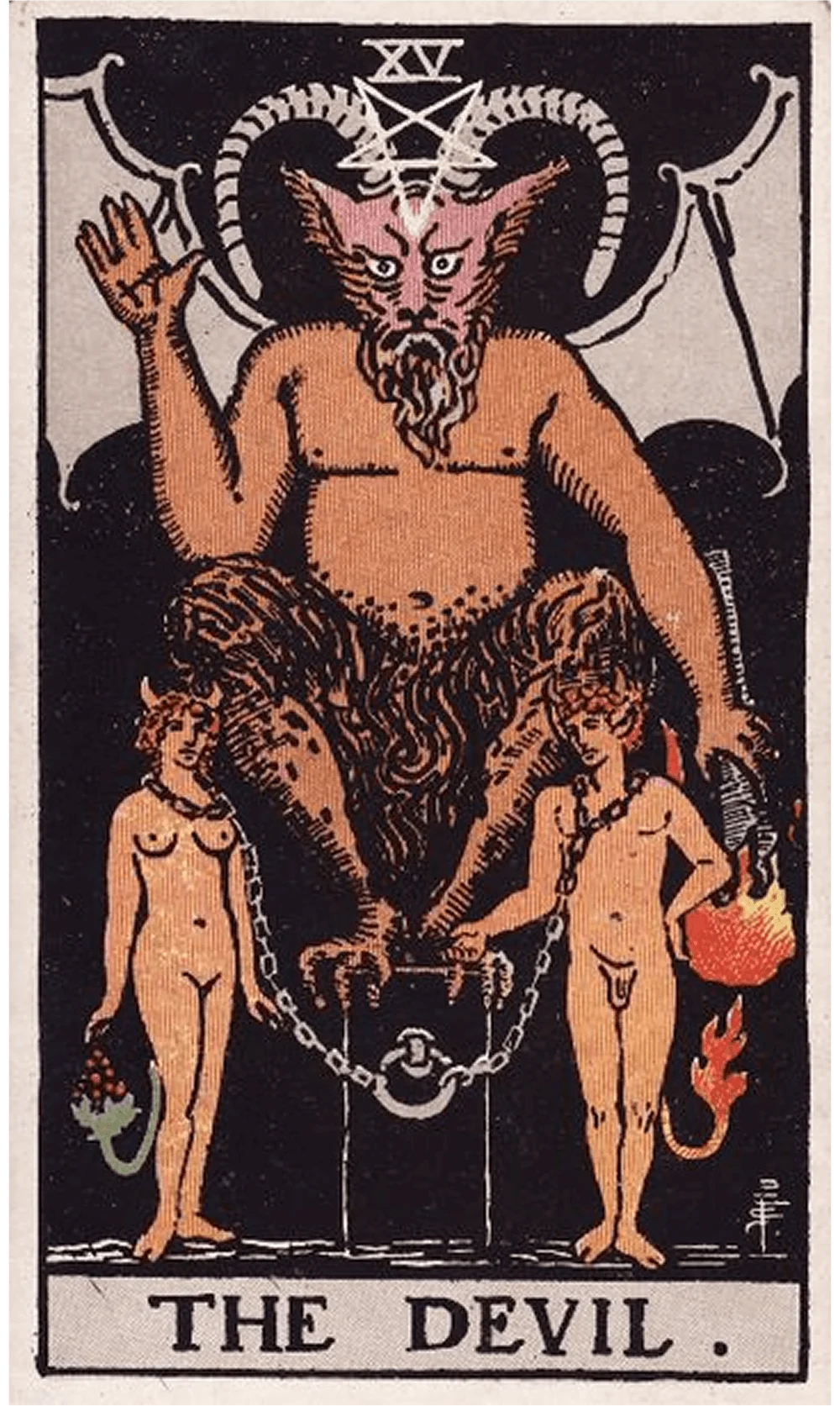
The Devil
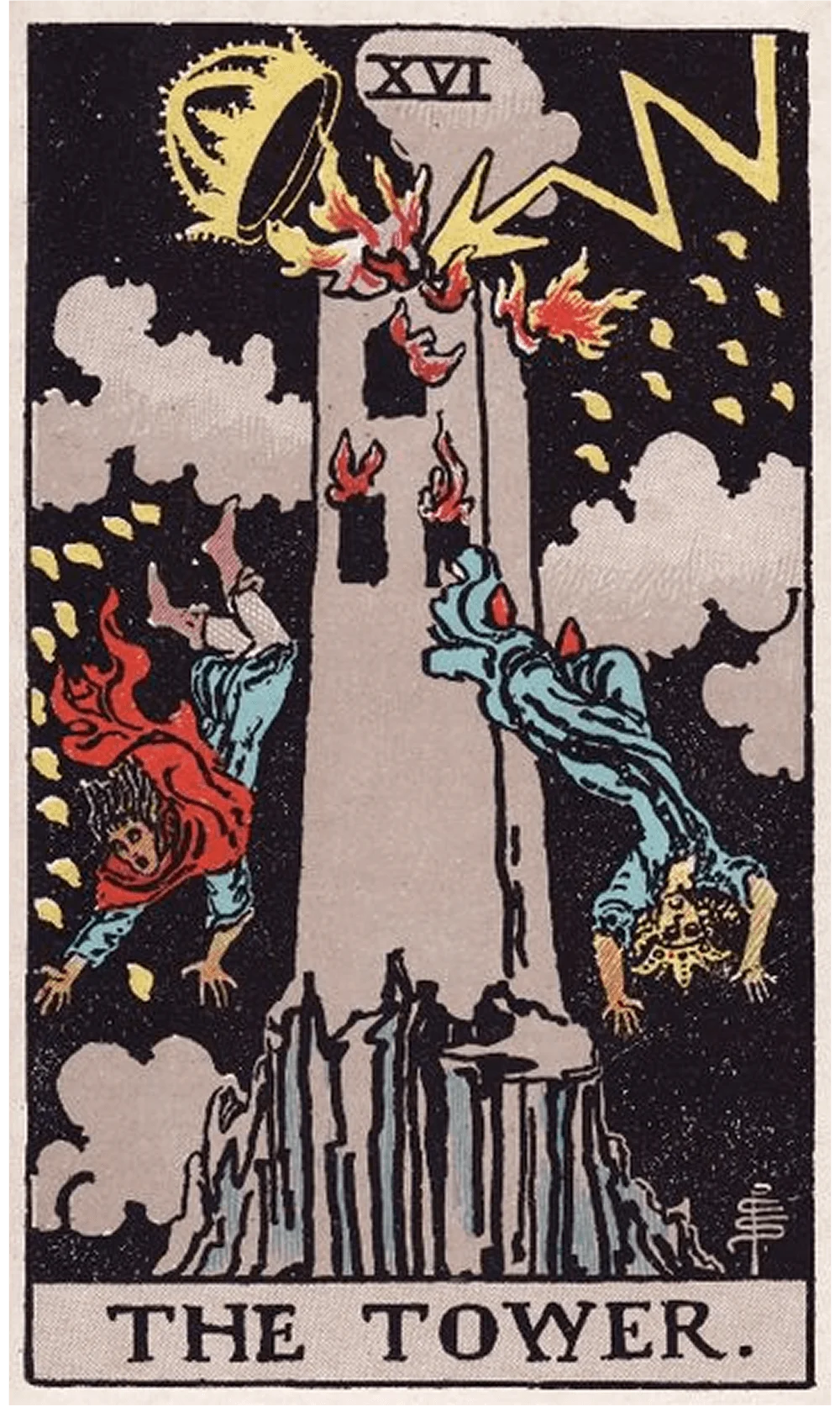
The Tower
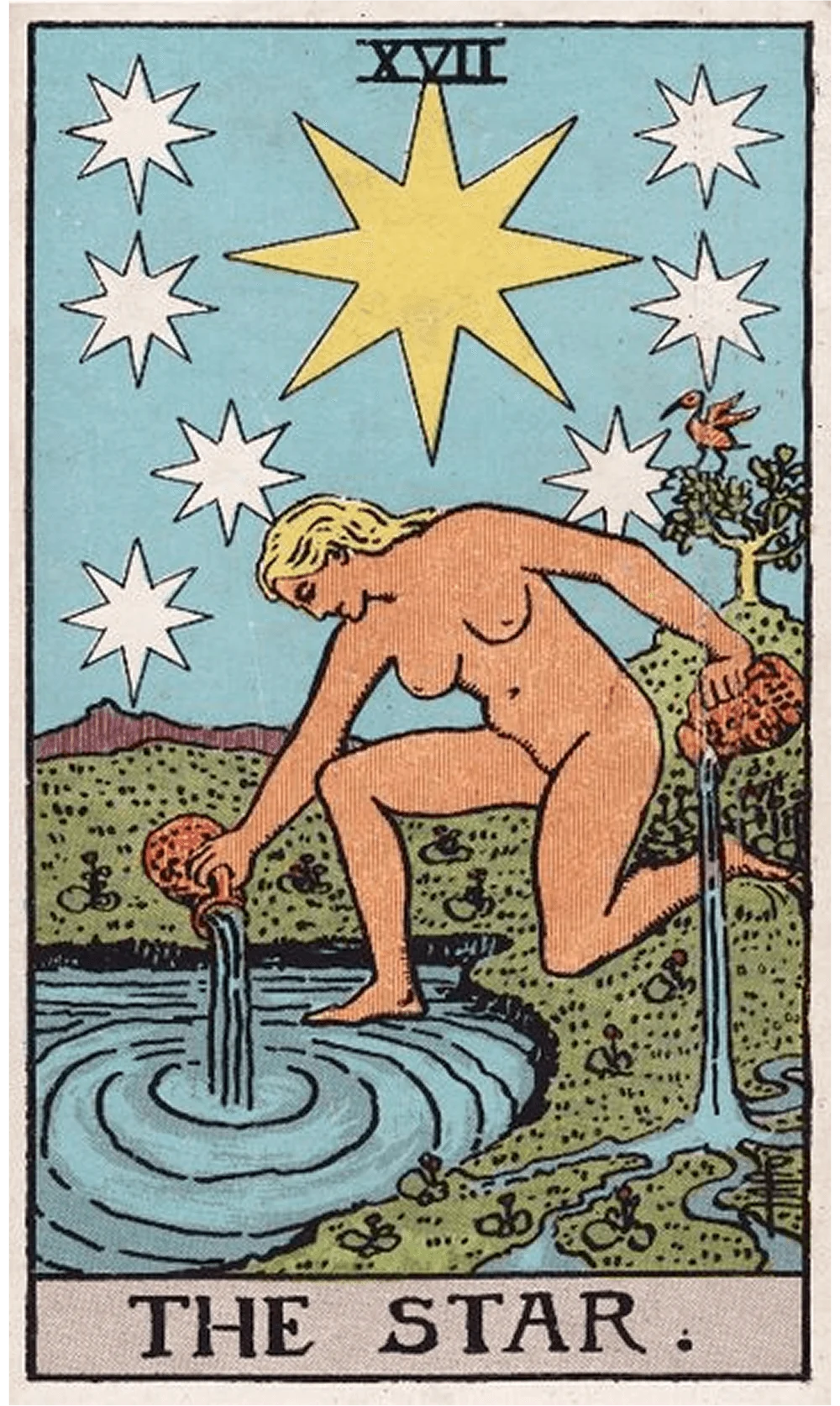
The Star
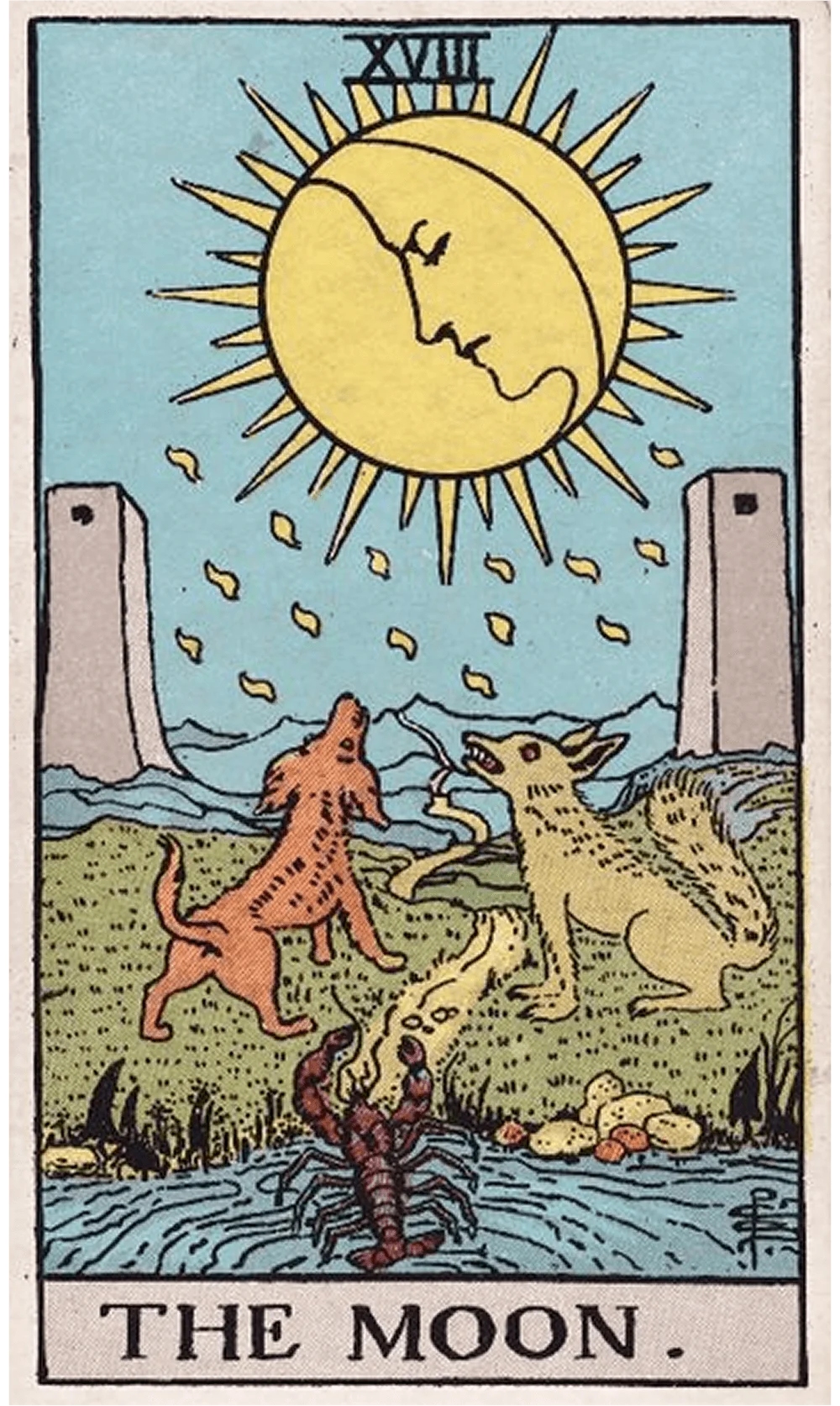
The Moon
The Sun
Judgement